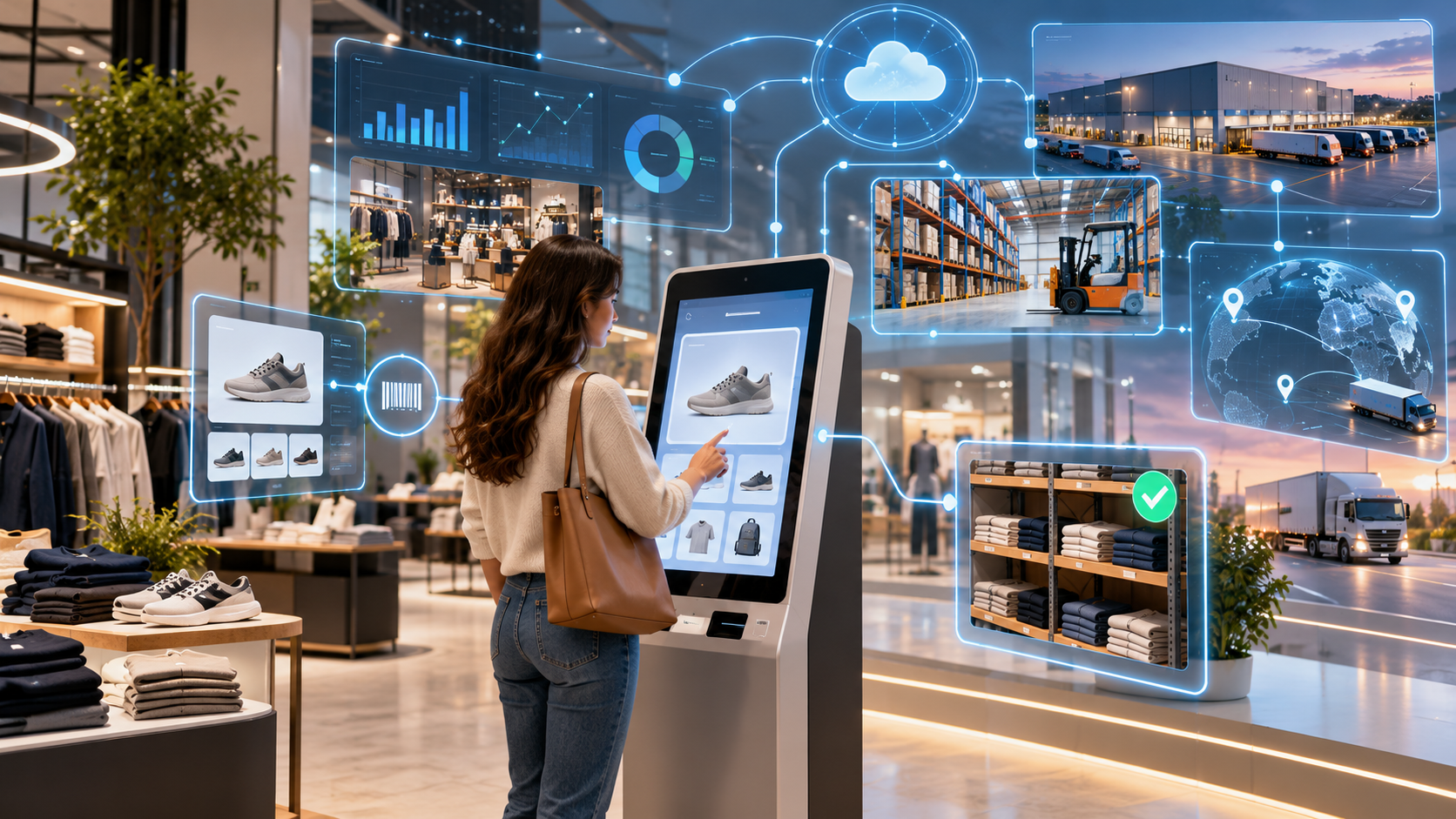
Understanding how customers move, interact and make decisions inside a retail store is becoming a major advantage for modern retailers. With growing competition, rising digital expectations and increasing operational costs, retailers need smarter ways to analyze what actually happens inside their stores. This is where Computer Vision powered retail analytics is transforming the future of offline shopping.
Today, retailers are using visual analytics for retail to decode human behavior at scale by tracking customer movement, product interactions, dwell time, queue patterns and overall store engagement. These insights drive better merchandising, store layout decisions, staffing strategies and personalized customer experiences. Combined with machine learning, in-store behavior analytics has become a core part of modern retail strategies.
This article explores how retailers are using Computer Vision to understand in-store behavior, improve store performance and deliver data-driven customer journeys. It also includes real-world use cases, practical examples and the essential keywords you requested.
Why Retail Needs Analytics Powered by Computer Vision
Even with digital transformation in full swing, physical retail continues to dominate many categories. But the challenge is clear. Retailers often do not know what is happening inside the store. Sales numbers tell only the final outcome. They do not explain:
- Why customers pick certain products
- Which aisles attract the most engagement
- Where bottlenecks occur
- Why shoppers abandon carts
- How store layout impacts conversions
Computer Vision solves this by turning video feeds into actionable insights. It delivers real-time data that helps retailers take informed decisions instead of depending on guesswork.
Retailers use video analytics solutions to analyze both customer behavior and operational efficiency. Cameras become smart sensors that map the entire customer journey from entrance to checkout. As a result, retailers get access to insights that were impossible to capture manually.
Key Capabilities of CV-Based Retail Analytics
1. Understanding Customer Movement Patterns
Retailers use in-store behavior analytics to understand footfall patterns, aisle engagement and time spent in key zones. For example:
- Which sections are most visited
- How customers navigate during rush hours
- Which displays attract maximum attention
- Whether promotional areas are performing well
These insights help optimize merchandising, signage, product placement and store flow.
Retail footfall tracking also provides accurate visitor counts and peak hour mapping that helps managers schedule staff more efficiently.
2. Customer Journey Analysis via CV
Computer Vision enables complete mapping of in-store journeys. It identifies touchpoints where customers engage the most and where they drop off. This helps retailers redesign store layouts to maximize discovery and conversions.
For instance, some shoppers directly visit known sections while others browse across categories. Understanding these different journeys helps create more intuitive store experiences.
3. Shelf Interaction and Engagement Analytics
AI-powered retail insights help detect:
- How often customers pick up a product
- Which products are touched but not purchased
- How often stockouts occur
- Which SKU displays lead to higher conversions
This is especially useful for CPG brands and category managers who want deeper insights into consumer behavior at the shelf level.
4. Queue Management and Billing Efficiency
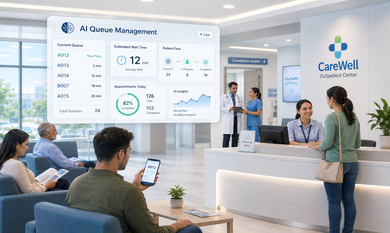
Long queues are one of the biggest reasons for lost sales. With video analytics solutions, retailers can track queue length in real time and alert staff to open new counters when needed.
This reduces wait time, improves customer satisfaction and increases store throughput.
5. Security and Loss Prevention
Computer Vision helps track suspicious movements, unauthorized access and theft attempts. It also supports anomaly detection that identifies unusual activity patterns. This is increasingly becoming a part of automated loss prevention systems.
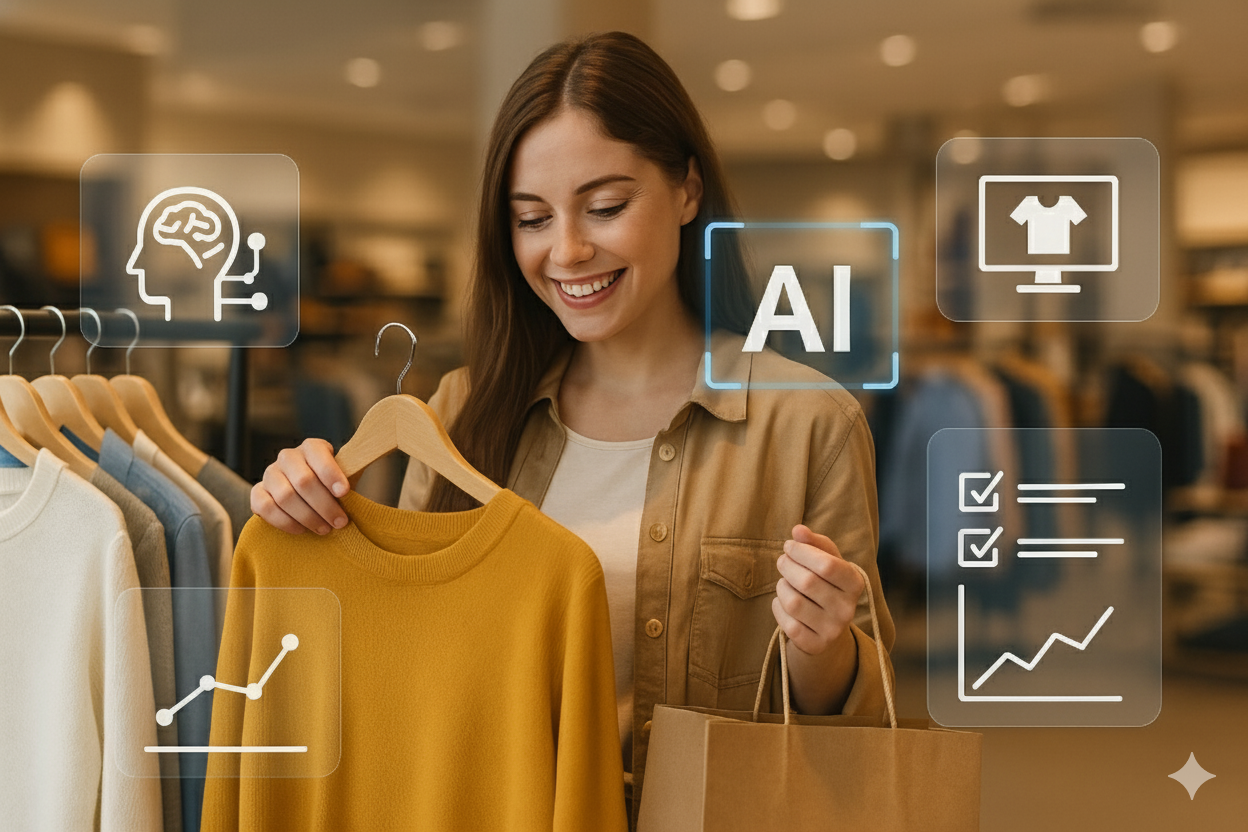
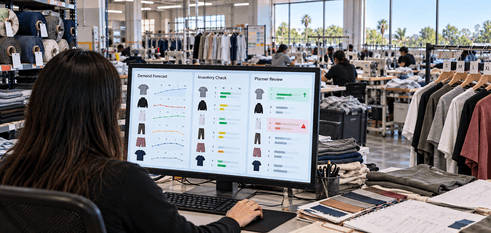
Practical Use Case: Improving Store Layout for a Fashion Retail Chain
Imagine a fashion retailer noticing that customers frequently crowd the first two aisles while the deeper shelves remain under-visited. With visual analytics for retail, the chain discovers:
- Customers naturally move toward high-lighting regions
- Casual wear gets 60 percent engagement but formal wear only 20 percent
- Trial room queues slow down customer flow
Using Computer Vision insights, the retailer:
- Adds engaging displays to deeper sections
- Introduces better aisle lighting
- Improves trial room operations
- Places high-margin items along the observed customer path
The result is a measurable improvement in conversions and store navigation.
Realistic Scenario: Increasing Cross-Selling for a Supermarket
A supermarket chain wants to increase cross-category sales. With in-store analytics using machine learning, they learn that customers who pick fresh vegetables often skip the grains aisle completely.
By positioning relevant bundles near the vegetable section and improving internal navigation, the brand boosts cross-selling opportunities. This is how data analytics solutions for retail drive revenue in practical ways.
How AI and Machine Learning Enhance CV-Based Retail Analytics
Machine learning brings deeper intelligence to Computer Vision. It helps in:
- Detecting patterns across thousands of hours of footage
- Predicting shopper intent
- Differentiating between product interactions
- Identifying anomalies in footfall
- Automating reporting
Retailers also benefit from Dallas AI software experts who help deploy scalable and reliable systems for multi-store operations. Machine learning development services dallas enables real-world implementation of these advanced analytics systems with improved accuracy and speed.
Why Retailers Prefer Computer Vision Over Traditional Sensors
Traditional sensors offer limited information. They count footfall but cannot explain behavior. They detect movement but cannot interpret engagement. Computer Vision goes deeper by providing context-rich and accurate insights.
It helps retailers understand not just how many people arrived but how they interacted, what they saw, what they ignored and what drove their final purchase.
This level of depth is the foundation of AI-powered retail insights.
Optimization Example: Boosting Conversions in Electronic Stores
Consider electronic retailers that display dozens of gadgets. Using customer journey analysis via CV, they identify:
- Which devices attract maximum viewing time
- Which demo stations fail to convert
- Where to place high-demand devices
- How to design better store layouts
This leads to more informed decisions, improved customer engagement and optimized inventory strategy.
Conclusion
Computer Vision is helping retailers create smarter, more profitable and data-driven stores. It transforms raw video into meaningful insights, enhances customer experience and supports operational efficiency.
As retailers adopt more AI-driven tools, the ability to analyze in-store behavior will become a major competitive advantage.
Companies looking for advanced implementation often partner with specialists. If you are exploring modern Computer Vision solutions for your retail business, Theta Technolabs offers end-to-end support across Web, Mobile and Cloud. Their expertise in computer vision development services dallas helps retailers build intelligent and scalable in-store analytics systems tailored to business needs.
Transform Your Retail Stores with AI and Computer Vision
Connect with us to build advanced analytical solutions and unlock the future of retail insights. Email: sales@thetatechnolabs.com








.png)


.png)











.png)