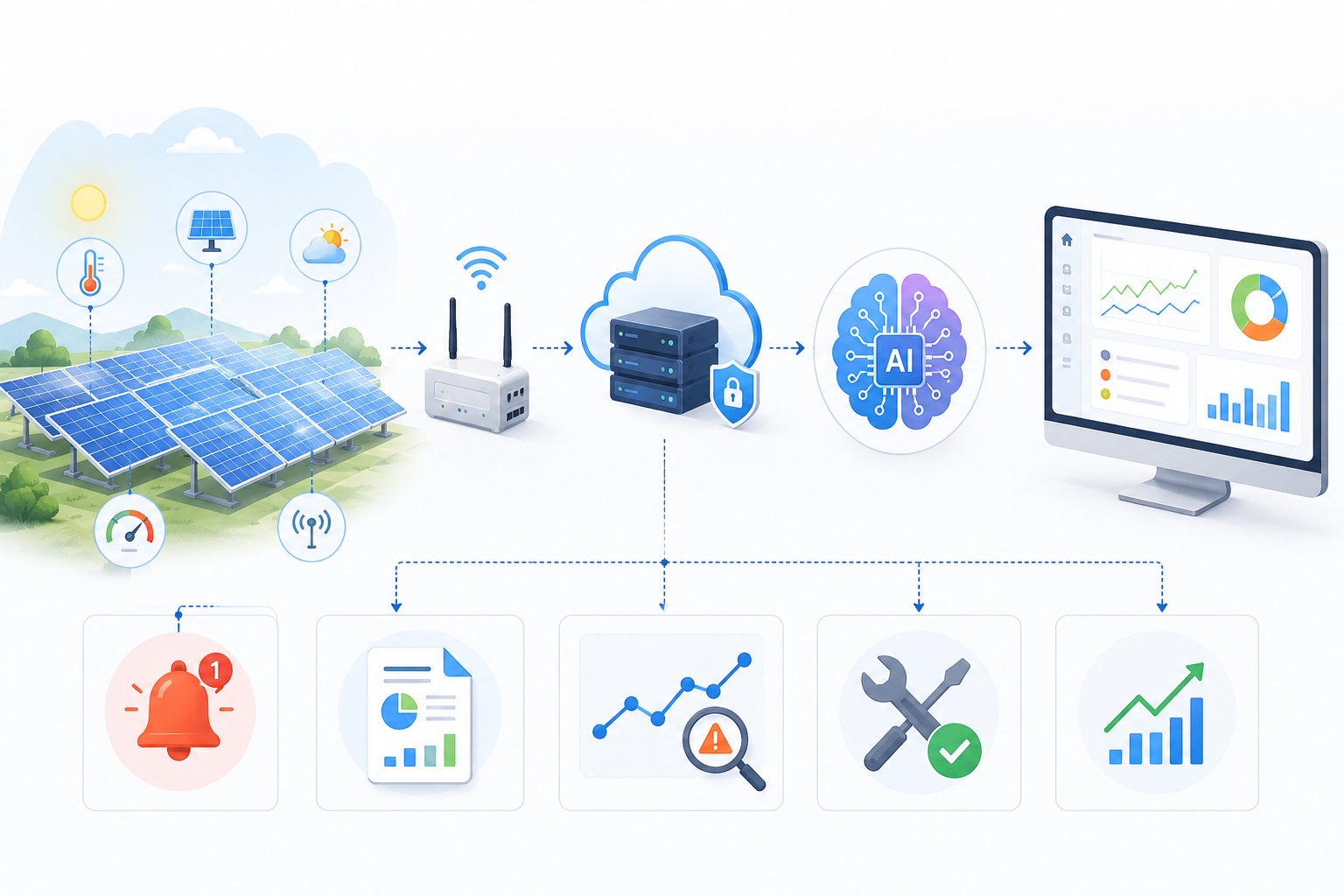
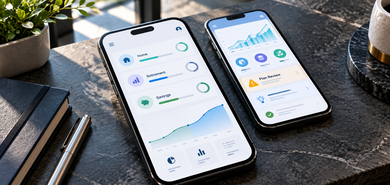
Many WealthTech products collect useful financial data, yet the planning experience can still feel generic. A user may see balances, transactions, investment performance, and standard recommendations without receiving guidance that reflects goals, cash flow, risk preferences, time horizon, or changing circumstances.
AI financial planning can help close that gap. By combining financial data with user context, AI can support more relevant planning insights, identify when assumptions have changed, and explain why a plan may need attention. The goal is not to hand financial decisions to software. It is to make planning more responsive, understandable, and useful.
For San Francisco WealthTech apps, this means building a controlled personalization layer that works with existing product logic, data pipelines, APIs, and review processes.
Personalization Starts with Financial Context, Not Just More Data
Collecting more data does not automatically create personalized financial planning. The useful part is understanding how different pieces of information affect a user's plan.
A WealthTech platform may already know account balances, transactions, portfolio holdings, income, and recurring expenses. But useful financial planning personalization also depends on why the user is saving, when funds may be needed, how much risk the user can accept, what commitments already exist, and whether those conditions have changed.
Two users can hold similar portfolios but need very different guidance. One may be saving for a home within a few years, while another is focused on retirement over a much longer period.
This is why AI in wealth management works best when portfolio, cash-flow, goal, risk, and activity data are connected rather than treated as separate features. The planning layer also has to work with the rest of the product, including account integrations, dashboards, alerts, and fintech software solutions.
Which User Signals Should Drive an AI-Personalized Financial Plan?
Effective AI wealth management personalization starts with signals that can materially change a user's planning needs.
Goals, Cash Flow, and Financial Commitments
A platform may need to understand whether the user is building an emergency reserve, saving for a home, planning for education, preparing for retirement, or managing several goals at once.
Cash flow adds practical context. Income, regular expenses, debt payments, planned purchases, and liquidity needs can affect whether a goal remains realistic under the current plan.
Risk Preferences and Investment Context
Risk tolerance, investment horizon, asset allocation, portfolio concentration, and recent investment activity can also influence planning.
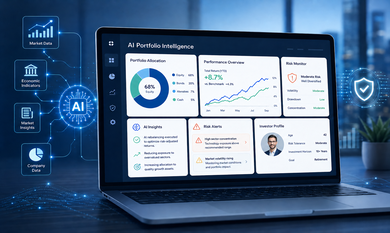
AI portfolio personalization can use these signals to surface relevant information or identify when a portfolio no longer aligns with assumptions in the plan. It should not be treated as permission for an AI system to make unrestricted investment decisions.
Changes in User Circumstances
Personalization becomes more useful when the system can respond to change. A new income level, revised savings target, different spending pattern, shorter time horizon, or major portfolio change may affect the plan.
Instead of waiting for the user to rebuild the plan manually, the application can identify the change and flag the areas that may need review.
How the AI Personalization Layer Works Inside a WealthTech App
An AI-powered financial planning app does not need one AI component to handle every task. Different technologies are better suited to different parts of the workflow.
Machine Learning for Patterns and Predictions
Machine learning in wealth management can help identify patterns across financial behavior, portfolio activity, and user history. It may support change detection, segmentation, cash-flow forecasting, or alerts when a plan may need another review.
These outputs are probabilistic, so they should be treated as decision support rather than guaranteed predictions.
Rules for Financial and Product Constraints
Not every decision needs machine learning. Deterministic rules are often more appropriate for eligibility requirements, risk limits, required checks, workflow routing, and product constraints.
The AI component may identify a signal, while a defined rule determines whether that signal creates an alert, starts a review, or simply updates a dashboard.
Predictive Analytics for Changing Financial Conditions
Predictive market analytics can add context where investment-related planning depends on changing market conditions, portfolio exposure, or risk signals. It can surface patterns or scenarios that deserve attention, but it cannot guarantee a market outcome or investment return.
LLMs for Explanation and User Interaction
Large language models can support the communication layer. They may summarize financial context, explain why an alert appeared, answer questions using approved account and planning data, or turn complex outputs into clearer language.
A reliable workflow should ground those explanations in approved data and product rules. An LLM should not invent missing financial facts or create recommendations outside platform controls.
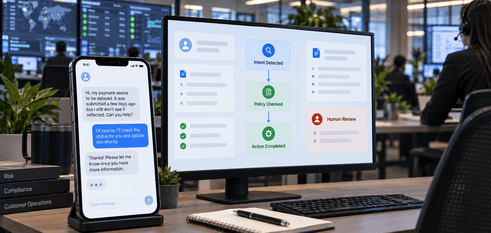
A practical workflow looks like this:
- Collect relevant financial context.
- Evaluate meaningful changes and patterns.
- Generate planning insights within defined rules.
- Explain the result or route it for the appropriate action.
Personalization Needs Explainability, Controls, and Human Review
Personalization should make a financial product more relevant without making important decisions harder to understand.
If a planning recommendation changes, the product should identify the relevant cause, such as a revised savings target, increased expenses, a shorter goal timeline, or a portfolio change. The platform should also preserve the source data and decision path needed for review.
For WealthTech firms, the applicable regulatory framework depends on how the business is structured. SEC-regulated investment advisers remain subject to their fiduciary, compliance, and recordkeeping obligations under the Investment Advisers Act, while FINRA-regulated broker-dealers must continue to comply with applicable securities laws and FINRA rules when using GenAI. For FINRA member firms, relevant areas include supervision, communications, recordkeeping, fair dealing, and the integrity, reliability, and accuracy of AI used within supervisory processes.
For a WealthTech product, that supports a practical design principle: high-impact actions should have defined controls. The application can prepare information, detect changes, explain relevant factors, and route a case. Where regulation, product policy, or risk requires review, a qualified person or approved process should remain responsible for the final action.
Example: Personalizing a Financial Plan Inside a San Francisco WealthTech App
Consider a user with stable monthly income, an investment portfolio, a medium-term home-purchase goal, a long-term retirement goal, and an established risk profile.
Several months later, the user's spending increases and the planned home-purchase date moves closer. The portfolio has also shifted because of market movement.
A personalization workflow could detect those changes and re-evaluate the assumptions used by the plan. It might identify that the shorter purchase timeline changes near-term liquidity needs. It could then show which part of the plan deserves attention and explain the inputs that triggered the review.
If portfolio allocation is relevant, the system can surface that context without automatically changing investments. The user, adviser, or another approved reviewer can decide what action is appropriate.
This is a practical use of AI because the product uses current information to keep the plan aligned with stated goals and circumstances.
Building Personalization into an Existing WealthTech Product
A company does not always need to rebuild its platform to add intelligent planning. WealthTech app development can introduce personalization as connected services around the existing product.
A practical implementation sequence is:
- Choose one clear personalization use case.
- Identify the account, transaction, portfolio, goal, and profile data needed.
- Define product rules, risk boundaries, permissions, and review requirements.
- Add the appropriate ML, predictive, or language capability.
- Design explanations and human-review paths before launch.
- Test the workflow against realistic and edge-case financial scenarios.
- Monitor output quality, data changes, and user feedback after deployment.
For companies working with an AI development company in San Francisco, the technical work may include APIs, data pipelines, backend services, AI integration, authentication, permissions, logging, and monitoring.
What AI Should Personalize and What Should Stay Controlled
The useful boundary is not "AI or no AI." It is deciding which tasks can benefit from automated analysis and which actions require confirmation, rules, or professional review.
Frequently Asked Questions
How can AI personalize financial planning?
AI can combine goals, cash flow, portfolio information, risk preferences, and changing circumstances to identify more relevant planning insights and highlight areas that may need review.
What data does an AI financial planning app need?
The required data depends on the use case, but it may include accounts, transactions, income, expenses, liabilities, goals, portfolio information, risk profile, time horizon, and relevant historical activity.
Can AI update a financial plan when a user's circumstances change?
Yes, if the application is designed to process new information. It can detect relevant changes, reassess affected assumptions, and present updated planning insights for confirmation or review.
Can AI replace a financial adviser?
AI can support analysis, personalization, monitoring, and communication. It does not remove the need for professional judgment, regulatory controls, or human review where those are required.
Personalization Should Make Financial Planning More Relevant, Not Less Controlled
Effective personalization connects financial context, appropriate AI techniques, defined product rules, explainable outputs, and controlled review workflows. The result is a planning experience that can respond more intelligently when a user's goals or circumstances change.
Adding AI-powered personalization does not necessarily require rebuilding an existing WealthTech platform. Theta Technolabs can integrate AI capabilities with existing web, mobile, cloud, and financial systems through secure APIs, scalable cloud architecture, and backend services. Technologies such as Python, TensorFlow, PyTorch, and cloud-native services can support the AI layer while existing financial workflows continue to operate through the appropriate integrations.
For tailored AI-powered financial planning and WealthTech development solutions, contact us at sales@thetatechnolabs.com.







































.png)





.png)


























.png)