

A failed bearing, overheated motor or damaged pump may be the visible reason a machine stops. However, replacing the affected component does not always address the condition that caused it to fail. If that condition remains, the same breakdown may return.
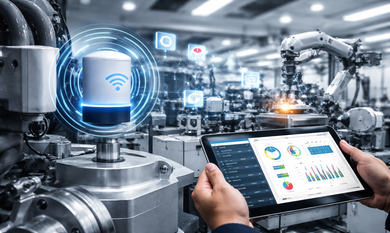
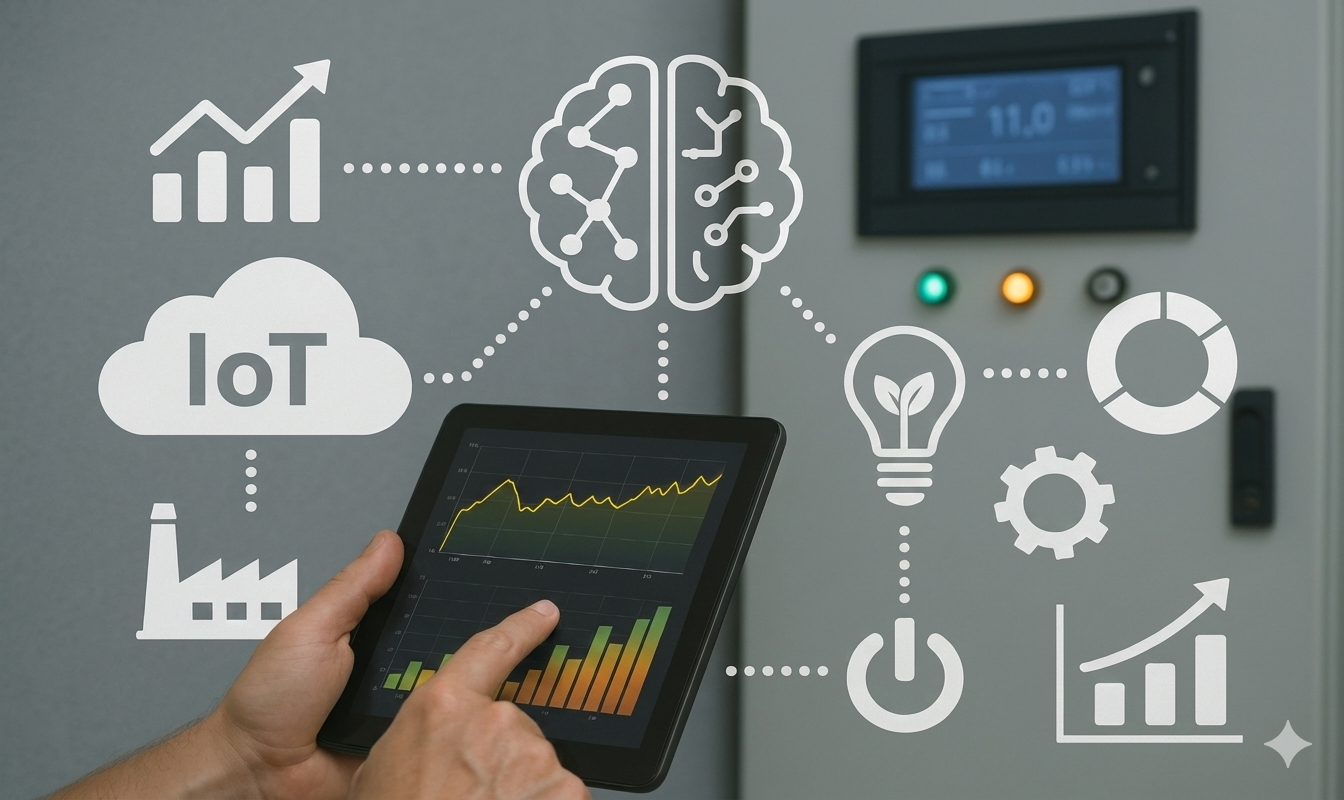
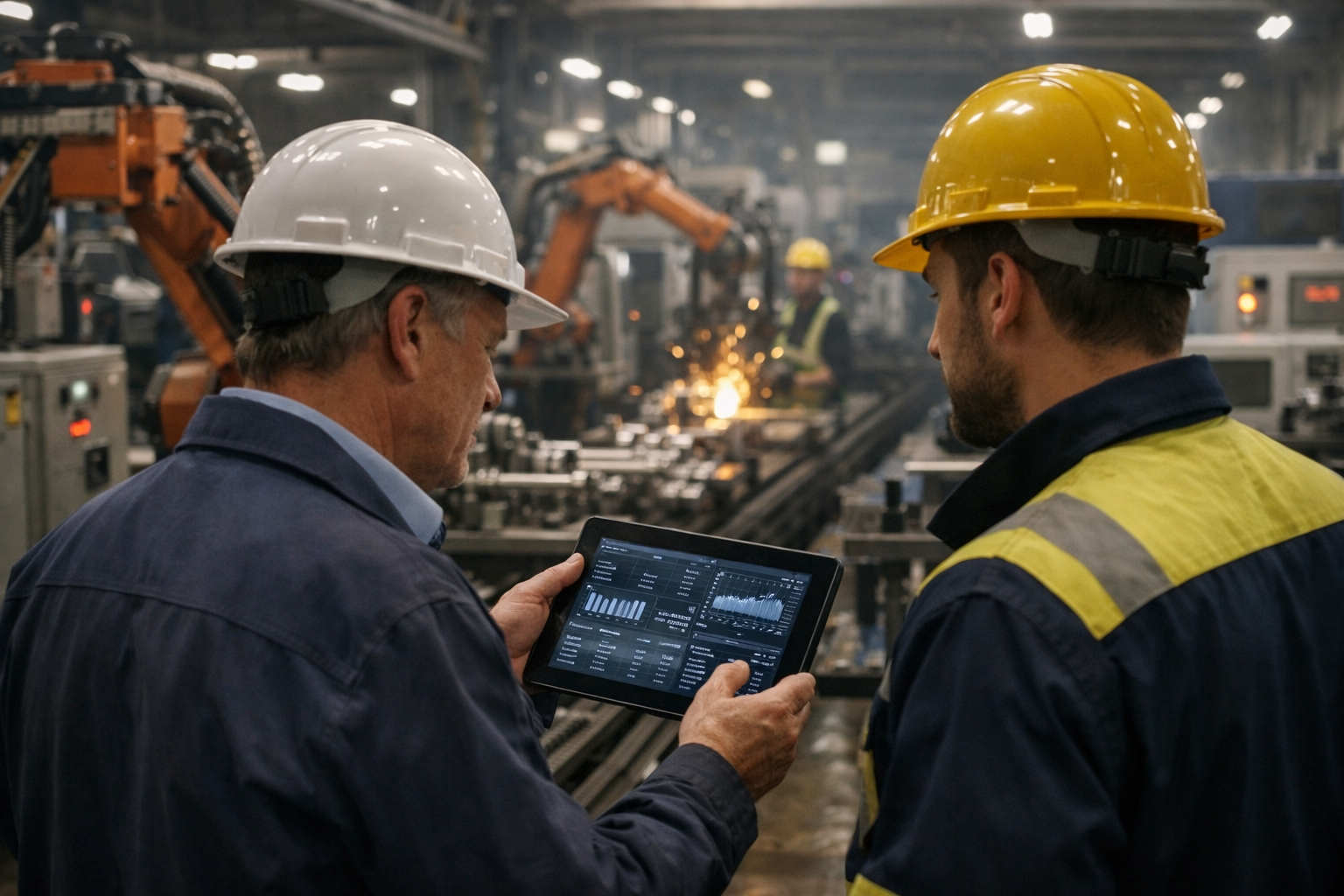
IoT root cause analysis for equipment failures gives maintenance teams continuous information about machine conditions before, during and after a breakdown. By combining sensor readings with operating data and maintenance records, manufacturers can investigate recurring equipment failures with more context than a manual inspection or isolated work order can provide.
Why Recurring Equipment Failures Are Difficult to Diagnose
Traditional maintenance records often explain what failed but provide limited information about what happened before the failure. A technician may record that a bearing was replaced, for example, without knowing that vibration had increased over several weeks or that the equipment had repeatedly operated under an abnormal load.
Several problems make recurring failures difficult to investigate:
- Machine conditions change across shifts and production runs.
- Intermittent problems may disappear before inspection.
- Sensor, alarm and maintenance records may be stored separately.
- Technicians may classify the same problem differently.
- Repairs may remove the symptom without correcting its cause.
- Knowledge may remain with individual employees instead of being recorded.
IoT equipment condition monitoring addresses these gaps by creating a time-stamped history that teams can review after an event.
Understanding the Difference Between an Anomaly and a Root Cause
IoT data can reveal unusual behaviour, but an anomaly is not automatically a root cause.
Consider four different levels of information:
- Anomaly: Vibration has moved outside the machine’s normal pattern.
- Symptom: The motor is overheating.
- Failure mode: The motor bearing has degraded.
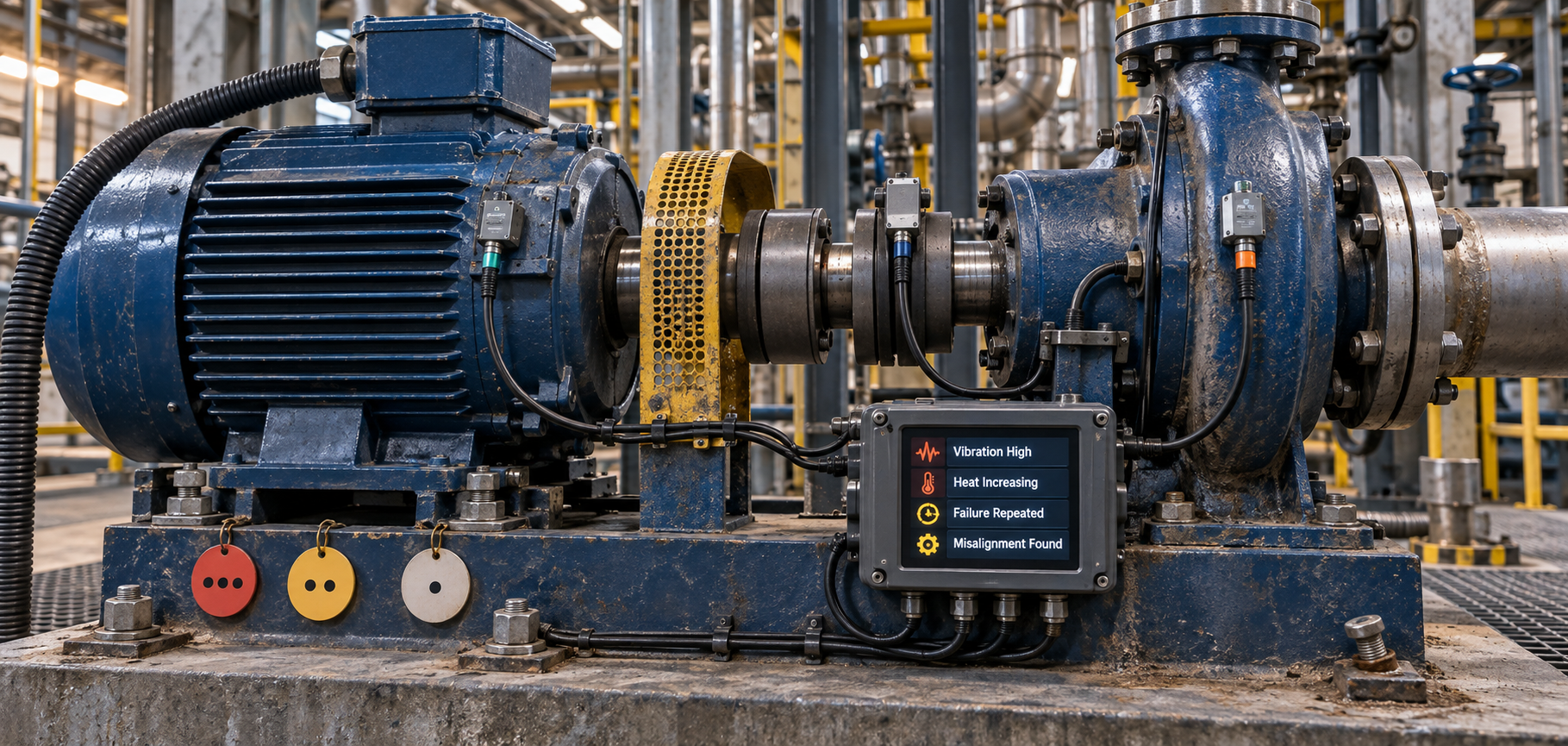
- Possible root cause: Shaft misalignment placed abnormal stress on the bearing.
Industrial IoT predictive maintenance may detect the vibration change and warn that a failure could occur. Equipment failure root cause analysis goes further by examining the conditions surrounding repeated events to determine why the same failure mode continues to appear.
The final conclusion should still be validated through physical inspection, testing and engineering judgement. IoT supports the investigation. It does not eliminate the need for qualified maintenance and reliability professionals.
How IoT Identifies the Root Cause of Equipment Failures
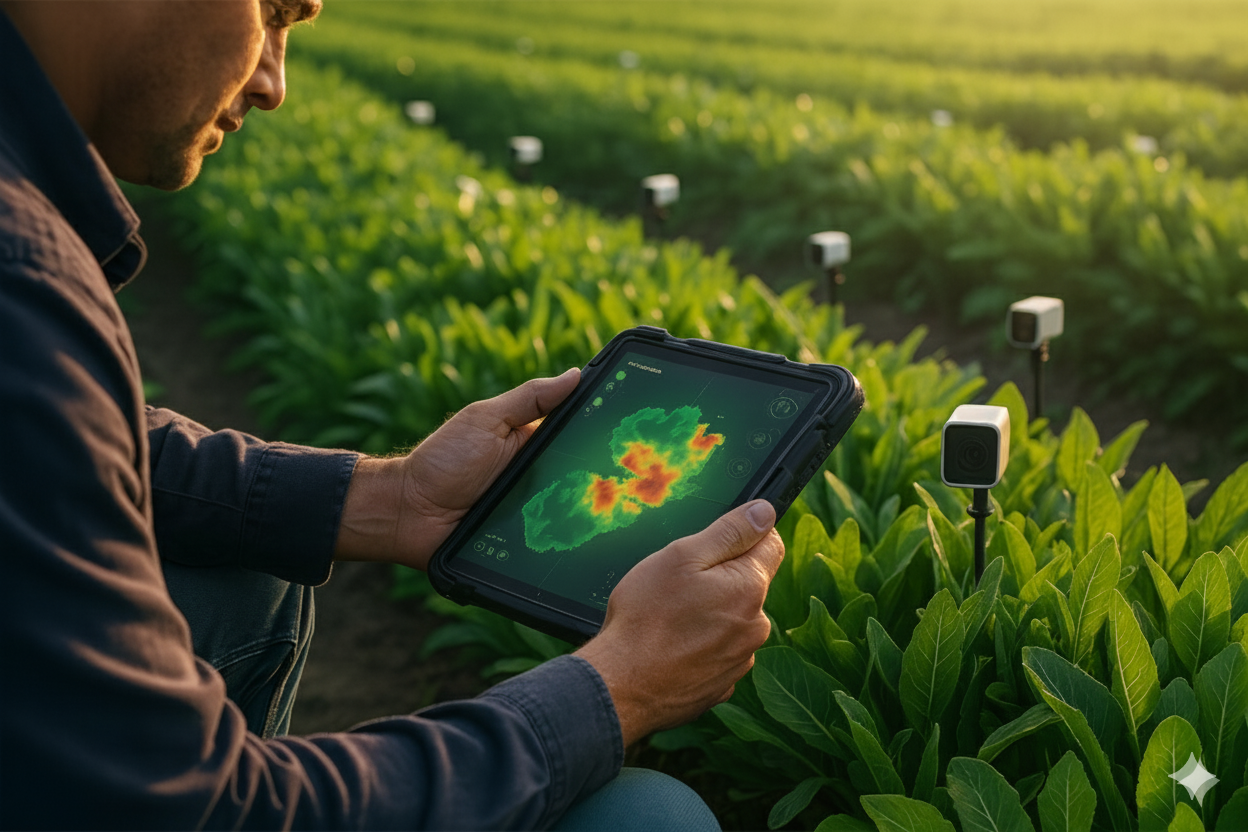
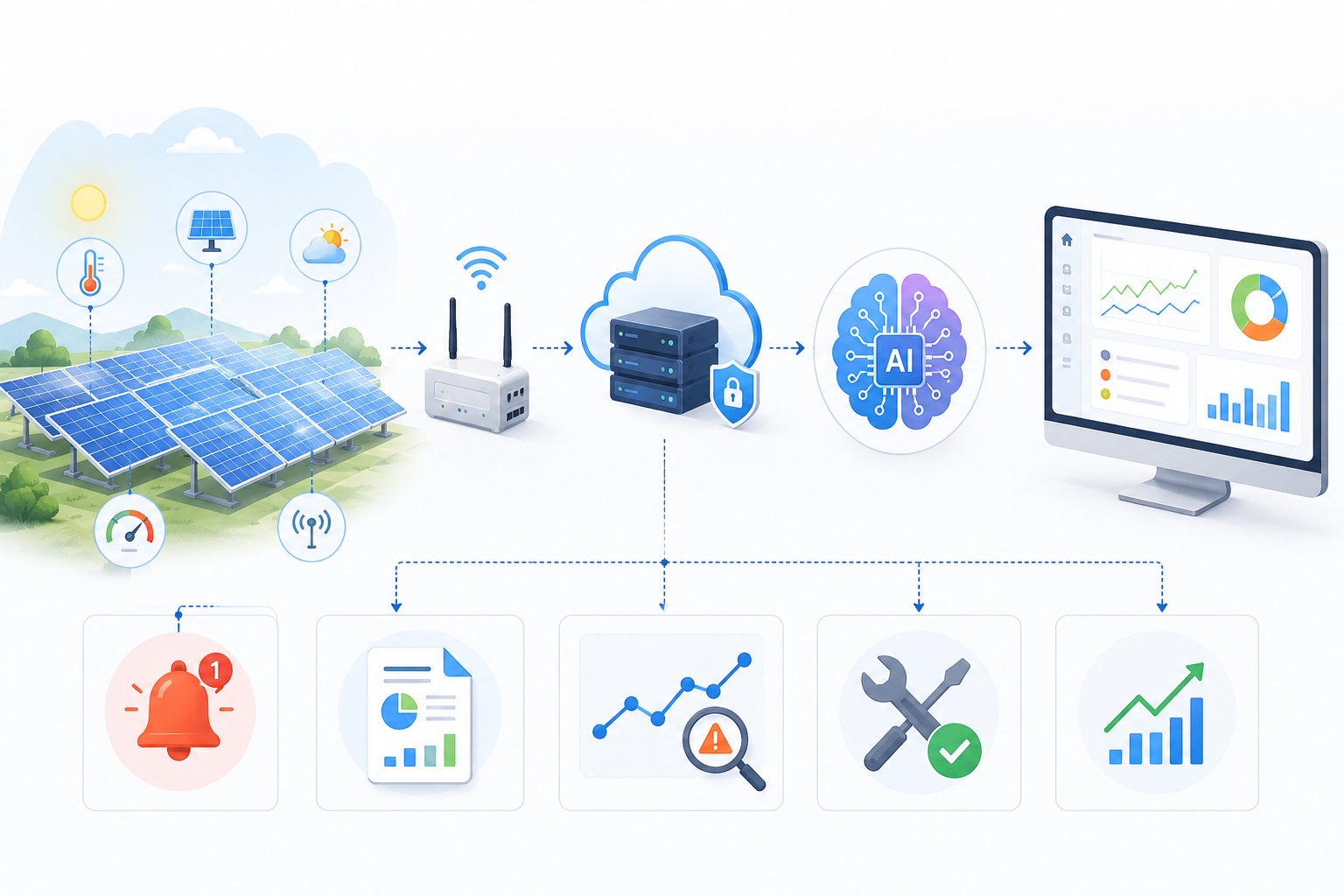
IoT systems continuously collect information from selected machines and components. When equipment fails, the maintenance team can examine what changed before the event instead of relying only on observations made afterward.
Capturing Conditions Before the Failure
Sensors may collect:
- Vibration
- Temperature
- Electrical current
- Pressure
- Flow rate
- Humidity
- Speed
- Acoustic signals
- Oil condition
- Cycle time
The appropriate measurements depend on the asset and suspected failure mode. Vibration and temperature monitoring may be useful for motors, bearings, pumps, fans and gearboxes. Pressure and flow data may be more valuable for hydraulic or process equipment.
Sensor installation also matters. Incorrect placement, mounting or sampling frequency can produce incomplete or misleading readings.
Adding Operating Context
A sensor reading becomes more useful when the system also knows what the machine was doing. The IoT platform can associate readings with:
- Production speed
- Equipment load
- Product or batch
- Machine operating state
- Shift
- Ambient conditions
- Alarm history
- Operator actions
- Recent maintenance
A vibration increase at maximum load may have a different meaning from the same increase while the machine is idling.
Comparing Repeated Failure Events
Machine failure pattern detection allows teams to compare several breakdowns. If the same sequence appears before each failure, it provides a stronger direction for investigation.
Historical sensor data can be processed through AI-driven IoT analytics services to identify relationships among operating conditions, anomalies and maintenance events.
Correlation alone does not prove causation. It helps maintenance teams determine what to inspect, test or rule out.
A Recurring Pump Failure: From Symptom to Root Cause
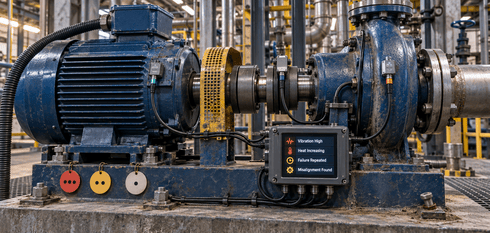
A production pump at a Chicago manufacturing facility repeatedly shuts down because of overheating. Each time, the maintenance team replaces the worn bearing, but the problem returns.
IoT sensors are installed to monitor:
- Pump vibration
- Bearing temperature
- Motor current
- Flow rate
- Inlet pressure
The collected data reveals that inlet pressure drops shortly before vibration and temperature increase. Further inspection identifies a partially blocked inlet filter. The restricted flow causes cavitation, which damages the bearing and leads to overheating.
The team cleans the filter, adjusts its inspection schedule and creates an alert for abnormal inlet pressure. Continued monitoring confirms that pressure, vibration and temperature remain within the approved operating range.
In this illustrative scenario, the damaged bearing was the visible failure. IoT data helped the team investigate the underlying condition causing that failure to recur.
A Real-World Implementation Pattern
AWS has documented a predictive-maintenance architecture used with manufacturing equipment in its fulfilment centres. Sensors collect vibration and temperature data, analytics identify abnormal conditions, and technicians receive information to support diagnosis.
The documented solution combines time-series sensor analysis with repair manuals, images and technician input. It separates sensor alarm generation from root-cause diagnosis, which is an important distinction for manufacturers planning similar systems. The complete implementation pattern is available in the AWS root-cause diagnosis guide.
This example does not guarantee the same results for another plant. Equipment types, operating environments, data quality and maintenance processes all influence performance.
How an IoT Root-Cause-Analysis System Can Be Implemented
A manufacturer should start with one recurring problem instead of attempting to connect every asset at once.
1. Select a Critical Asset
Choose equipment with repeated failures, meaningful downtime or high maintenance effort. Review previous work orders to identify the most common failure mode.
2. Define the Investigation Question
The objective should be specific. Instead of asking, “Why does this machine fail?” ask, “What operating conditions appear before repeated bearing failures on this pump?”
A clear question helps determine which data must be collected.
3. Select and Install the Right Sensors
Choose measurements based on the asset and suspected failure mode. A motor may require vibration, temperature and current monitoring. A hydraulic system may need pressure, flow and oil-condition data.
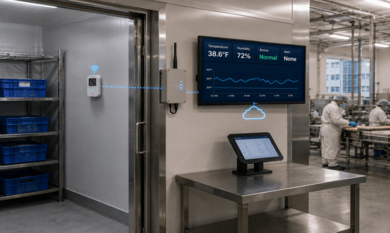
Older equipment can often be monitored with retrofit sensors and an edge gateway without replacing its existing controller.
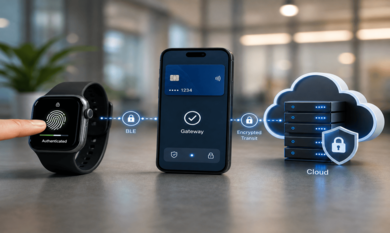
Manufacturers operating equipment with different protocols and data environments may need IoT & BLE consulting and development services in Chicago to plan sensor connectivity and a secure edge-to-cloud architecture.
4. Establish a Normal Operating Baseline
Collect enough data to understand how the asset behaves under different loads, speeds, products and environmental conditions. Fixed thresholds alone may create false alarms if normal behaviour changes with operating context.
5. Connect Maintenance and Production Records
Integrate relevant IoT data with CMMS work orders, MES operating states, alarm histories and component-replacement records. Consistent timestamps and equipment identifiers are essential for reconstructing the sequence surrounding each failure.
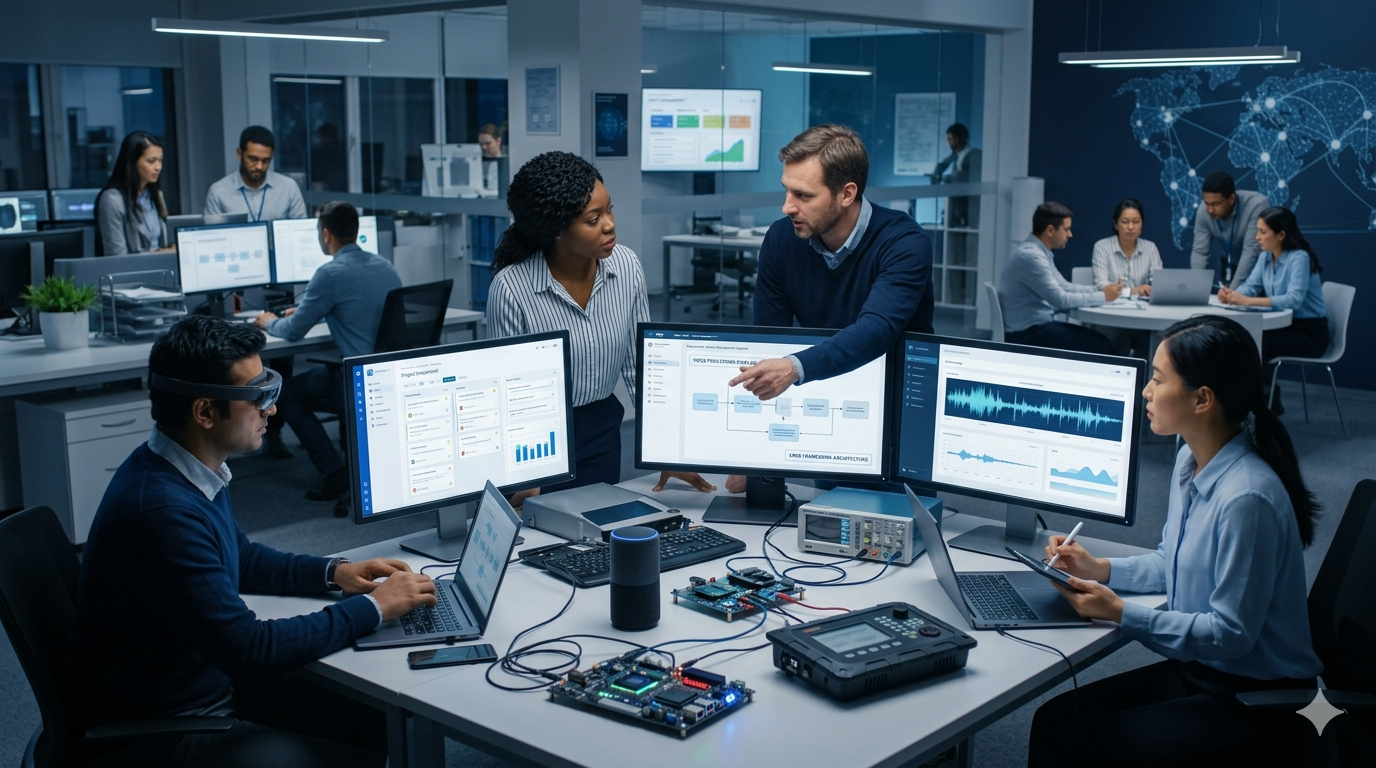
6. Analyze Recurring Patterns
Compare the time period before each event. Identify which measurement changed first, which conditions were shared and whether the pattern appeared on similar machines.
The output should be treated as a possible cause to investigate, not an automatic diagnosis.
7. Apply and Validate Corrective Action
After completing an inspection, apply the appropriate repair or process change. Continue monitoring the same signals under comparable operating conditions.
If the abnormal pattern returns, the original conclusion may have been incomplete. If it does not return across an appropriate observation period, the evidence supporting the corrective action becomes stronger.
Why This Matters for Chicago Manufacturers
Chicago manufacturing operations include metal fabrication, food processing, industrial machinery, electronics, packaging and automotive-component production. These facilities may operate motors, pumps, conveyors, CNC machines, compressors and process equipment that produce valuable condition data.
The business impact is particularly relevant when examining unplanned downtime for Chicago CNC manufacturers. Repeatedly replacing components without investigating the surrounding conditions can keep plants in a reactive maintenance cycle.
IoT predictive maintenance solutions in Chicago should therefore be designed around actual equipment, failure histories and production requirements rather than generic dashboards.
Accuracy, Security and Human Review
An IoT system is only as reliable as its sensors, data and analysis. Manufacturers should account for sensor drift, communication interruptions, incorrect timestamps, missing maintenance records and changes in operating conditions.
Important safeguards include:
- Calibration and sensor-health monitoring
- Role-based access
- Encrypted data transmission
- Audit logs
- Consistent equipment identifiers
- Documented alert thresholds
- Maintenance-engineer review
- Clear handling of incomplete data
The system should show the evidence behind a suspected cause. It should not present an uncertain correlation as a confirmed engineering conclusion.
Conclusion
IoT helps manufacturers move beyond repeatedly treating visible symptoms by preserving the conditions surrounding each equipment failure. As an iot app development company chicago manufacturers can work with, Theta Technolabs provides IoT & BLE consulting and development services in Chicago for sensor connectivity, failure-pattern analysis, dashboards and integration with existing maintenance systems. We develop secure and scalable Web, Mobile and Cloud solutions that help manufacturing teams access equipment insights across different operational environments.
Frequently Asked Questions
Can IoT confirm the root cause of an equipment failure?
IoT can identify patterns and conditions associated with a failure, but those findings should be verified through inspection, testing and engineering analysis. Sensor correlation alone does not prove that one condition caused another.
Which sensors are most useful for recurring equipment failures?
The answer depends on the asset and suspected failure mode. Common measurements include vibration, temperature, current, pressure, flow, speed, acoustic signals and oil condition. Sensor placement and sampling frequency are also important.
Can older manufacturing equipment support IoT monitoring?
Older machines can often be monitored using retrofit sensors, industrial gateways and protocol adapters. The implementation should avoid interfering with existing control and safety systems and must follow equipment-vendor guidance.
How much historical data is required?
There is no universal period. Teams need enough data to represent normal operating conditions and relevant failure events. Rare failures may require a longer collection period than problems that occur every few weeks.
How can a manufacturer measure the value of the system?
Useful measures include recurring-failure frequency, time required to investigate an event, mean time between failures, emergency-maintenance activity, alert accuracy and whether the abnormal pattern returns after corrective action. Results should be compared with a documented baseline.



















.png)



.png)




















.png)