Solar farm operators often have access to inverter alarms and performance data. The harder part is deciding which signals point to a developing equipment problem and which reflect normal operating conditions. A temperature change, output drop, or communication issue does not automatically mean an inverter is about to fail.
IoT-based monitoring can bring inverter telemetry, site conditions, fault history, and maintenance records into one workflow. This blog explains what data matters, how predictive monitoring works, and how it can support better maintenance decisions.
Why Inverter Downtime Matters
Inverters are central to solar plant operations because they convert DC electricity from the array into usable AC power. When an inverter is unavailable, part of the plant may stop contributing power until the issue is resolved.
Problems do not always appear as one clear failure event. Teams may see recurring alarms, abnormal temperatures, communication interruptions, or efficiency changes before a shutdown.
That is why inverter fault detection should not rely on a single reading. A temperature rise is more useful when compared with load, ambient conditions, alarm history, and similar equipment.
Reactive, Preventive, and Predictive Maintenance
Most solar operations use a mix of maintenance approaches.
Solar inverter predictive maintenance does not replace scheduled maintenance or technician judgment. Predictive maintenance for solar inverters is most useful when it helps teams spot patterns that manual checks may miss, such as recurring warnings or gradual performance changes.
What IoT Adds to Inverter Monitoring
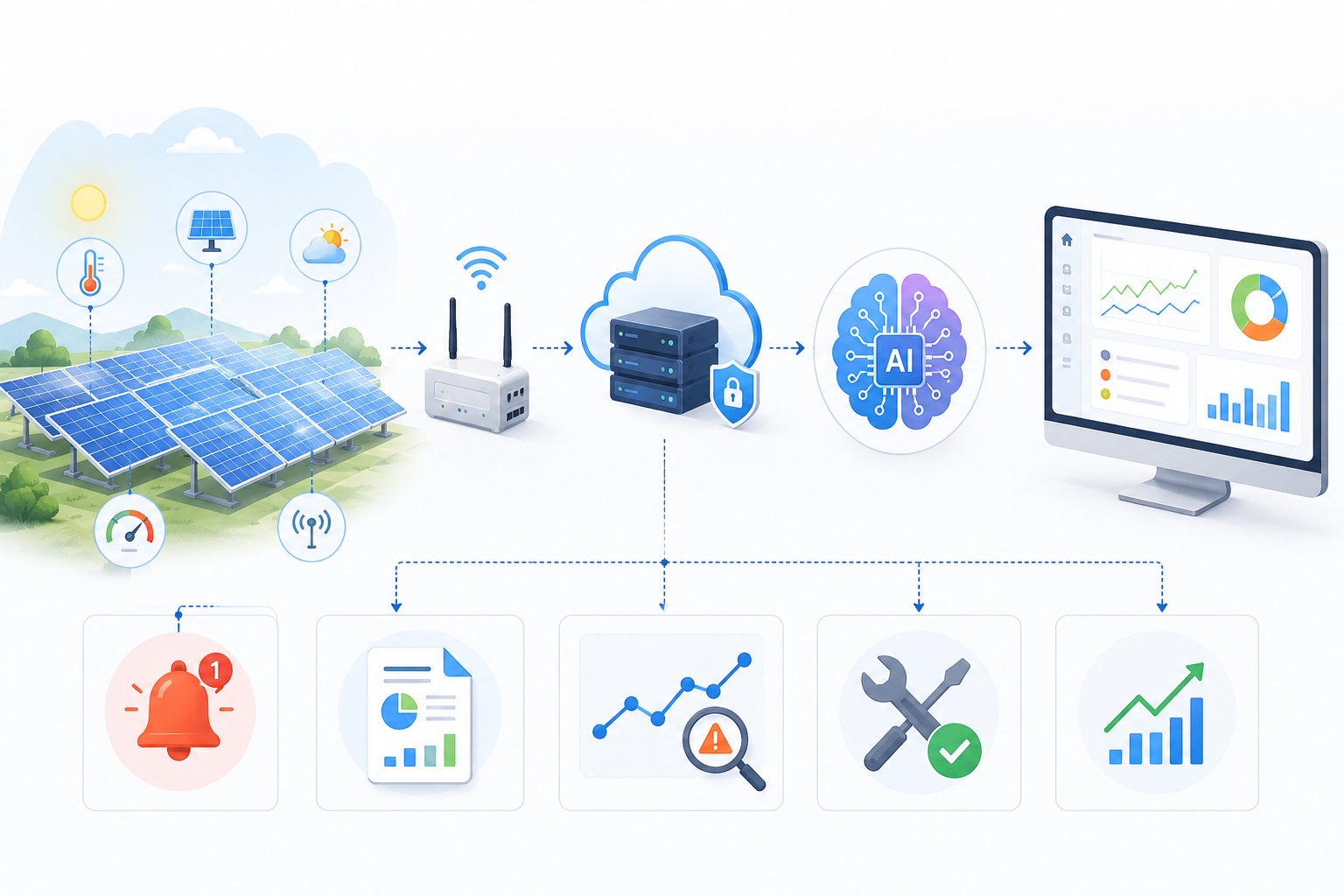
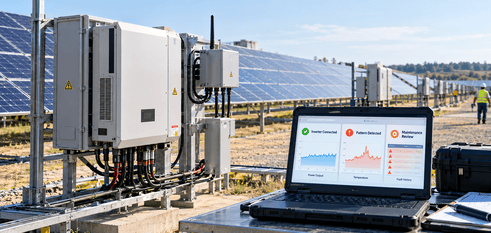
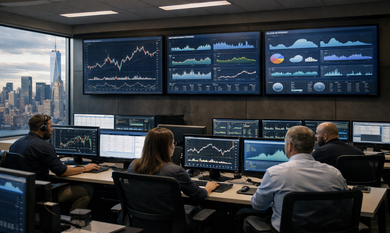
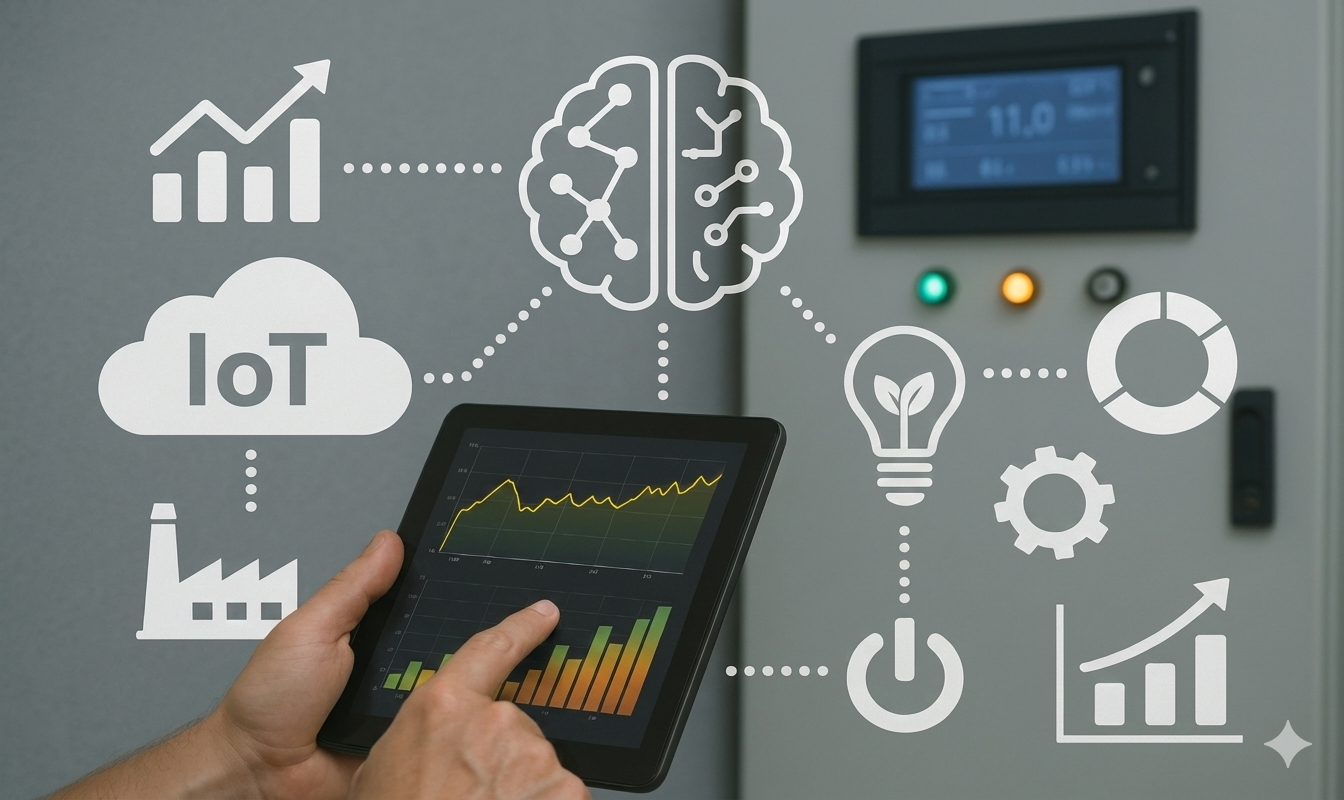
Traditional monitoring may show whether an inverter is online, offline, or reporting a fault. An IoT layer can add value by combining data from multiple devices, storing historical trends, and creating alerts from combinations of conditions.
A typical solar farm IoT monitoring flow is:
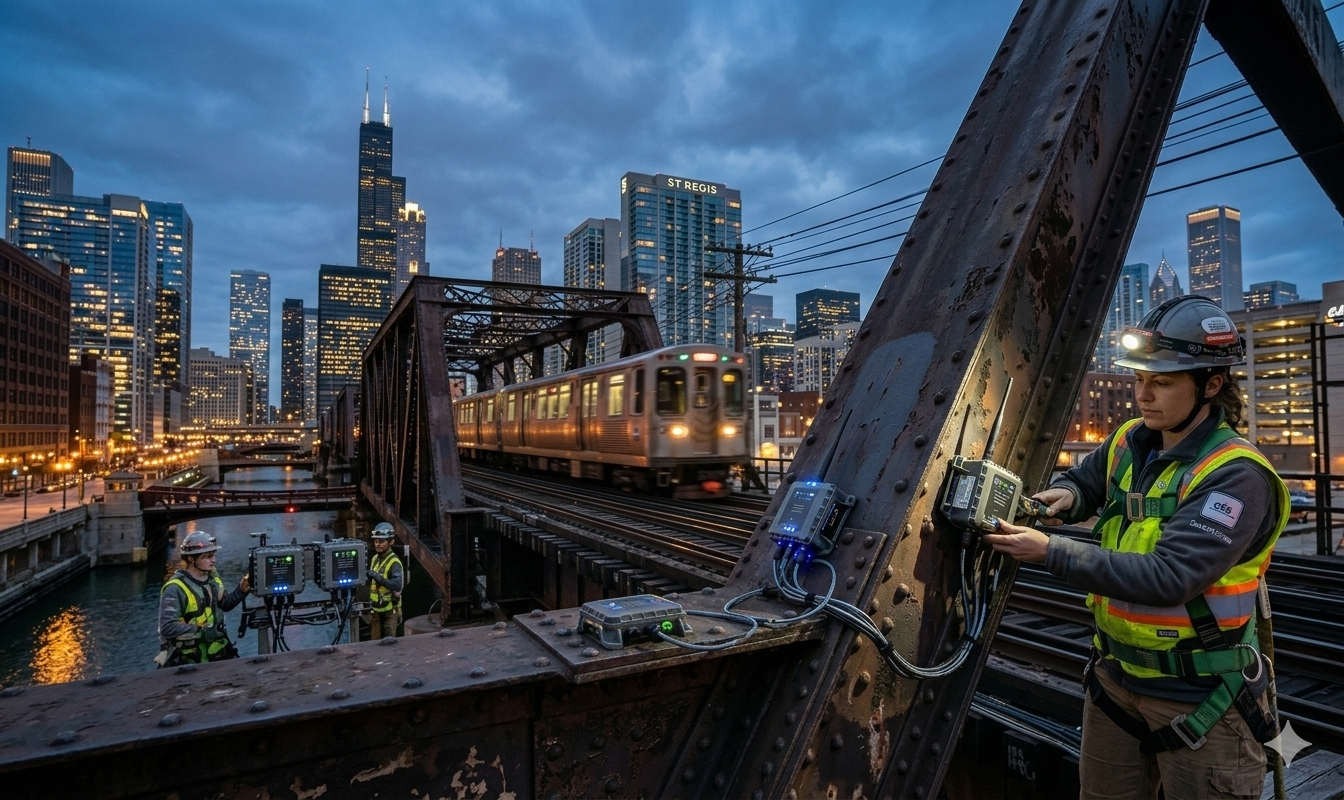
Inverter or sensors → gateway or existing monitoring system → IoT platform → analytics → O&M alert → human review
For a Houston solar operation, the architecture should be based on the site's actual equipment and interfaces. Existing SCADA, vendor portals, or remote monitoring systems may remain in place, with the IoT layer working alongside them.
Teams evaluating this type of setup can review IoT & BLE solutions in Houston for related monitoring, connectivity, and predictive-maintenance capabilities.
What Data Should Solar Farms Monitor?
Useful monitoring starts with data that is both available and trustworthy. Depending on the inverter and control system, real-time inverter monitoring may include:
- DC input and AC output measurements
- Power output
- Inverter temperature
- Operating status
- Fault and alarm history
- Efficiency trends
- Cooling or fan information where available
- Communication status
Site context also matters. Irradiance, ambient temperature, weather, grid events, and curtailment data can help explain why similar readings may have different meanings. Past alarms, component replacements, and technician notes can also show whether a pattern is recurring or new.
The 2024 Photovoltaic Inverter Reliability Workshop Summary Report & Proceedings provides useful industry context on photovoltaic inverter reliability, field experience, maintenance data, and failure analysis.
Not every inverter exposes the same telemetry, so monitoring should be designed around data that is actually accessible and reliable.
How Predictive Inverter Monitoring Works
Inverter failure prediction is not a single algorithm that produces a certain answer. A practical system usually works in five stages.
1. Collect the Available Data
Bring together inverter telemetry, alarms, environmental context, and relevant maintenance records.
2. Validate and Normalize It
Check for missing readings, inconsistent timestamps, unrealistic values, communication gaps, and unit differences.
3. Establish Normal Behavior
Create baselines that reflect how the equipment usually performs under comparable conditions.
4. Identify Abnormal Patterns
Look for combinations such as rising temperature, repeated warnings, unexpected output decline, or changing efficiency.
5. Send the Issue for O&M Review
Show the evidence behind the alert so the maintenance team can decide whether inspection is needed.
Can IoT predict every inverter failure before it happens? No. Some developing problems may create detectable patterns, while sudden or previously unseen failures may not. Predictive monitoring is better treated as an early-warning and prioritization tool.
A Practical Houston Solar Farm Scenario
Consider a Houston solar farm operating several utility-scale inverters. One inverter begins running at a higher temperature than comparable units during similar operating periods. Recurring warnings also appear while efficiency gradually changes.
None of these signals alone proves that failure is approaching. The monitoring system flags the combined pattern for review.
The O&M team can then check alarm history, cooling condition, electrical readings, recent maintenance, and site conditions. If inspection confirms a developing issue, maintenance can be scheduled.
This moves the team from isolated alarms toward a more informed investigation process.
Connecting IoT with Existing Solar Operations
A solar operator does not necessarily need to replace existing SCADA, vendor portals, or O&M software.
Depending on available interfaces, an IoT monitoring layer may connect through inverter APIs, industrial gateways, existing databases, cloud services, or communication protocols. The approach depends on manufacturer access, network architecture, cybersecurity requirements, and data quality.
This is where IoT development and consulting services can support the technical work. In many projects, the challenge is connecting existing systems, cleaning the data, and presenting useful information to maintenance teams.
Data Quality Comes Before Complex Analytics
Predictive analytics cannot compensate for unreliable source data. Missing readings, duplicate records, inconsistent timestamps, sensor errors, and communication dropouts can create false patterns.
A practical implementation should begin with trustworthy visibility. Teams should confirm what each signal represents, whether values are complete, and whether comparable devices report information consistently.
Once that foundation is stable, anomaly detection and predictive logic become more useful.
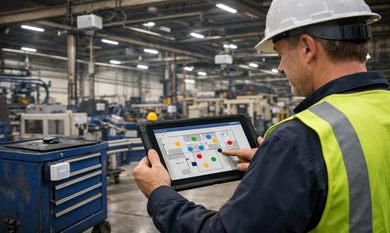
Turning Alerts into Maintenance Decisions
The monitoring process should continue beyond the dashboard.
A useful solar O&M monitoring workflow can follow this sequence:
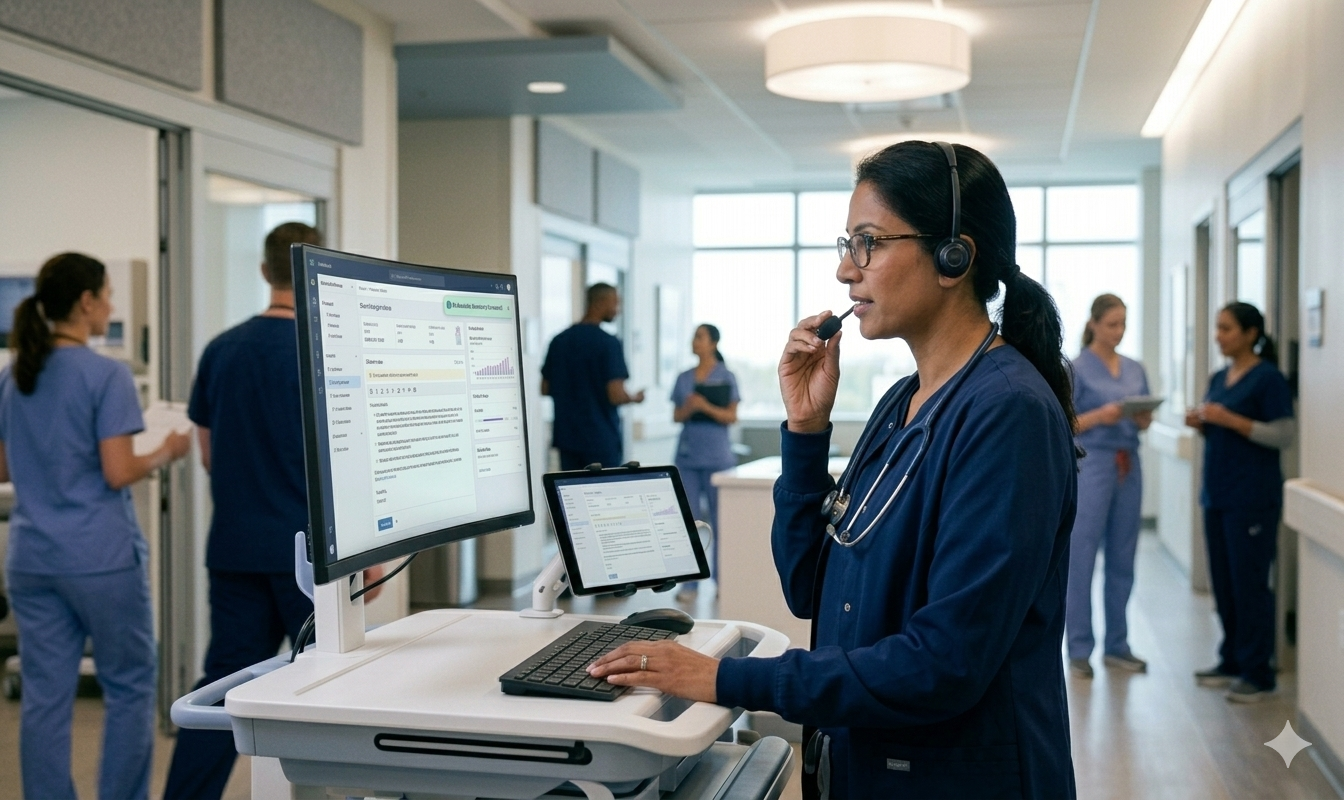
Condition detected → alert prioritized → evidence reviewed → technician decision → maintenance action → outcome recorded
A confirmed equipment issue can help refine future alert logic. If an alert was caused by a communication problem or normal variation, that should also be captured.
This feedback keeps human review at the center of maintenance decisions.
Where IoT Monitoring Can Help
IoT monitoring does not remove every cause of inverter downtime, but it can improve how teams detect and respond to developing problems.
Potential benefits include:
- Earlier visibility into unusual inverter behavior
- Faster investigation of recurring alarms
- Better prioritization across multiple assets
- Less dependence on manual data checks
- Clearer maintenance history
- Better coordination between monitoring and field teams
The value depends on data quality and how well alerts fit into the O&M process.
A Practical Implementation Approach
A solar operator can introduce predictive monitoring in stages:
- Assess inverter manufacturers, available telemetry, current monitoring systems, and maintenance workflows.
- Connect the priority assets and signals needed for the use case.
- Normalize and validate time-series data.
- Establish normal operating baselines.
- Configure engineering rules, trend analysis, and analytical methods where appropriate.
- Route alerts into the existing O&M process.
- Review technician feedback and refine alert logic.
A related example is the solar panel fault detection platform, which demonstrates how IoT and analytics can be applied to renewable-energy monitoring and fault detection.
Choosing the Technology Architecture
The exact stack depends on the site. A typical design may include an edge or IoT gateway, a communication layer, time-series storage, analytics services, and an operational dashboard.
For example, MQTT can support lightweight device messaging, AWS IoT Core can provide cloud-side device connectivity, and Python can be used for data processing or anomaly analysis. These are possible choices, not fixed requirements. Existing SCADA infrastructure or vendor APIs may remain central to the final design.
Building Around the Actual Solar Operation
Every solar farm has a different mix of equipment, communications, data, and maintenance practices. A useful monitoring system should be designed around those realities.
Theta Technolabs can develop and integrate IoT monitoring systems that connect inverter and operational data, provide centralized visibility, and support predictive-maintenance workflows around existing infrastructure.
Teams evaluating a similar setup can discuss their inverter environment, available data, and integration requirements with Theta Technolabs at sales@thetatechnolabs.com.
Frequently Asked Questions
How can IoT help reduce solar inverter downtime?
IoT can combine inverter data, alarms, site conditions, and maintenance information so teams can identify unusual behavior earlier and investigate recurring issues more efficiently. It cannot guarantee that every failure will be prevented.
What data is useful for predictive inverter maintenance?
Useful data may include electrical measurements, temperature, output, operating status, alarms, communication health, environmental context, and maintenance history. The exact data available varies by inverter and site.
Can IoT predict every inverter failure before it happens?
No. Monitoring and analytics can identify some abnormal patterns, but sudden or previously unseen failures may still occur. The system should support maintenance decisions rather than replace engineering judgment.
Can predictive monitoring work with an existing SCADA system?
Often, yes, depending on interfaces, protocols, and data access. Integration should be assessed for each site, including manufacturer and cybersecurity constraints.
Does predictive maintenance replace O&M technicians?
No. Predictive monitoring helps technicians decide where to focus attention. Inspection, diagnosis, safety checks, and maintenance decisions still require qualified personnel.








.png)


.png)















.png)

















.png)