

Most healthcare founders don't think about HIPAA seriously until late in the build. The database schema is already set, the analytics tool is already wired in, the third API integration is already live and only then does someone ask whether any of this actually protects patient data the way the law requires. At that point, it's not a small fix. It's a rebuild.
That's the real problem worth stating upfront: HIPAA-compliant app architecture isn't a feature you add before launch. It's a decision made at the same time as your database design, your cloud provider, and your API structure. This article covers what compliant architecture actually looks like when you're the one making decisions on tech stack, vendors, and data flow — not a basic "what is HIPAA" explainer. If you're a founder or CTO in San Francisco scoping a build right now, this should give you enough clarity to walk into vendor conversations without getting talked in circles.
Why Architecture-First Thinking Matters More Than a Compliance Checklist
There's a real difference between adding compliance features later and designing a system where protected health information (PHI) security is part of the data model from day one. A checklist tells you to encrypt data and log access. Architecture tells you where PHI actually lives, which services touch it, and what happens the moment a new integration wants access to it. Miss that distinction early, and you usually end up rebuilding core parts of the system instead of patching them.
San Francisco founders also carry an extra layer that a lot of general HIPAA guides skip over: California's CCPA and CMIA sit on top of federal HIPAA requirements. "HIPAA compliant" alone doesn't automatically mean compliant enough if you're operating in California and handling consumer health data outside a strict covered-entity relationship. This is a digital health startup compliance question worth raising with legal counsel early, not after the app is already live.
The Three Safeguard Categories You're Actually Designing For
The HIPAA Security Rule splits compliance into three safeguard categories. It helps to know what each one actually asks of you as a builder, not just as a checkbox.
Administrative safeguards cover internal policy who's authorized to access PHI, how your team is trained, how you respond when something goes wrong. This is process, not code, but it shapes how your access system needs to behave.
Physical safeguards matter less directly once you're cloud-hosted, since your infrastructure provider handles data-center-level security. Your job here is mostly picking providers who already meet that bar.
Technical safeguards are where your engineering team spends most of its time - encryption, access controls, audit trails, authentication. Per the U.S. Department of Health and Human Services, these three categories together make up the core of the Security Rule, and technical safeguards are where most of the real architecture decisions actually happen.
Encryption, Access Control, and Audit Logs - What "Compliant" Actually Requires
This is the part that separates a system genuinely built for PHI from one that just claims to be.
Encryption at rest and in transit isn't satisfied by putting HTTPS on your frontend and calling it done. Every API call carrying patient data needs TLS in transit, and your database along with backups needs encryption at rest, typically AES-256. It sounds obvious until you check whether backup snapshots and the logging pipeline are encrypted with the same care as the primary database. Often, they aren't.
Role-based access control healthcare app design means the system distinguishes between a receptionist, a nurse, and a billing admin not just between logged in and logged out. Each role should see only the PHI it needs to do its job. This gets harder as the app grows, so it's worth mapping the permission model before there are five different user types added onto a system that was originally built for one.
HIPAA audit logging needs to be tamper-evident tracking who accessed what and when, in a way that can't quietly be edited afterward. One trade-off worth planning for early: logs grow fast, and retention policy, meaning how long you keep them and where they're archived, is a real infrastructure and cost decision, not an afterthought.
The BAA Mistake Almost Every Startup Makes
Here's a question founders get wrong often: does signing a Business Associate Agreement (BAA) with your cloud provider cover your entire stack? It doesn't. A BAA with AWS, for instance, only covers the specific AWS services listed as HIPAA-eligible. If your app also runs on a separate analytics tool, an error-tracking service, or a push notification provider, and any of those touch PHI, each one needs its own signed BAA. Startups miss this most often with tools that feel small crash reporting, email delivery, in-app messaging until an audit or a breach shows that patient data passed through a vendor with no agreement in place.
Cloud Infrastructure Choices for HIPAA-Compliant Healthcare Apps
Most teams end up choosing between AWS, Google Cloud, and Microsoft Azure, all of which offer HIPAA-eligible services under a signed BAA. The choice isn't just about hosting it shapes how the rest of the system gets designed. AWS currently has one of the broader sets of HIPAA-eligible services and sees wide use among healthcare startups building this kind of HIPAA cloud infrastructure. Azure tends to fit well if you're already working in a Microsoft-heavy enterprise environment, which comes up more when you're selling into hospital systems rather than going direct-to-consumer. Whichever you pick, it needs to be settled before your data model is finalized, not after.
What This Looks Like for San Francisco Healthcare Startups Specifically
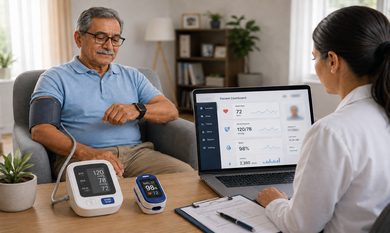
San Francisco's funding environment moves fast, and that speed affects how compliance gets treated. Investors doing diligence on a digital health startup are paying closer attention to compliance architecture earlier in the process, not just at the term sheet stage, a weak answer here can slow a raise down as much as a weak product metric can. The Bay Area also has a dense cluster of connected-device and wearable health startups, which adds its own complication: wearable data streams mean constant, high-frequency PHI transmission, and the architecture has to handle that volume without becoming a bottleneck or a compliance gap. If you're working in that space, it's worth looking at how elderly care and wearable data compliance in San Francisco is already being approached by teams solving similar problems locally.
For founders further along, working with a San Francisco healthcare app development company that has actually built HIPAA-compliant systems before, not just says it can, tends to reduce rework down the line.
Choosing a Development Partner Who Builds This Right the First Time
Before hiring anyone to build this, ask direct questions. Do they sign BAAs themselves as your business associate? Have they run a real risk assessment on a past project, not just filled out a template? Is audit logging something they build in by default, or something they add only if asked? The answers tell you more about their actual experience than a portfolio page will. This is also where HIPAA compliant healthcare software development as a discipline matters more than general app development experience - the two skill sets aren't interchangeable, and HIPAA compliant app development done without healthcare-specific experience tends to show up as gaps later, not upfront.
Frequently Asked Questions
Does every healthcare app need to be HIPAA compliant?
Only if you handle PHI on behalf of a covered entity — a hospital, insurer, clinic, or as a business associate to one. A general wellness app with no connection to a healthcare provider can fall outside HIPAA's scope, but the line is narrower than most founders assume. When in doubt, treat the data as PHI.
What happens if a vendor doesn't sign a BAA but still touches patient data?
That's a compliance gap, and it's one of the more common root causes behind HIPAA violations. Every vendor in your stack that can access PHI, even indirectly through something like an error-tracking tool, needs a signed BAA before it goes live.
How early should HIPAA compliance be built into the architecture?
At the data model stage, before development gets underway in earnest. Retrofitting compliance into an existing system is slower and more expensive than designing for it from the start.
Is HIPAA compliance enough for California-based healthcare startups, or does CCPA/CMIA add more requirements?
HIPAA alone usually isn't sufficient in California. CCPA and CMIA can add obligations depending on how your app collects and uses health data, so it's worth a conversation with legal counsel specific to your use case rather than assuming HIPAA compliance covers everything by default.
How We Approach This at Theta Technolabs
A lot of this comes down to the tech choices made in the first few weeks of a build - a Node.js backend structured around clear PHI boundaries, an AWS or Azure environment with the right services covered under a signed BAA, and access controls designed around how your team actually works, not added later. That's the kind of foundation we help healthcare startups put in place at Theta Technolabs. If you're scoping a build in San Francisco, you can reach us at sales@thetatechnolabs.com.



































.png)





.png)

























.png)

























.png)