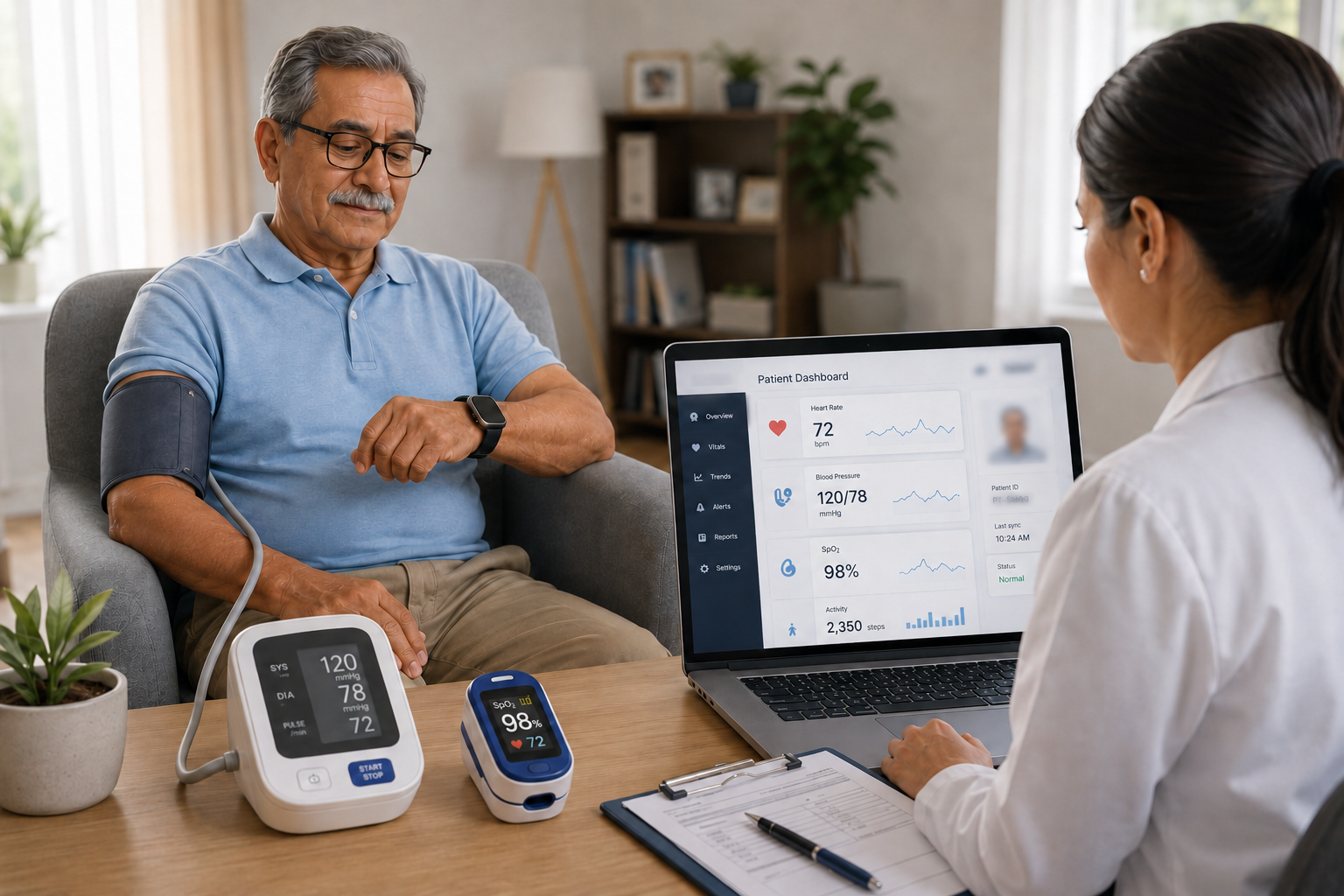


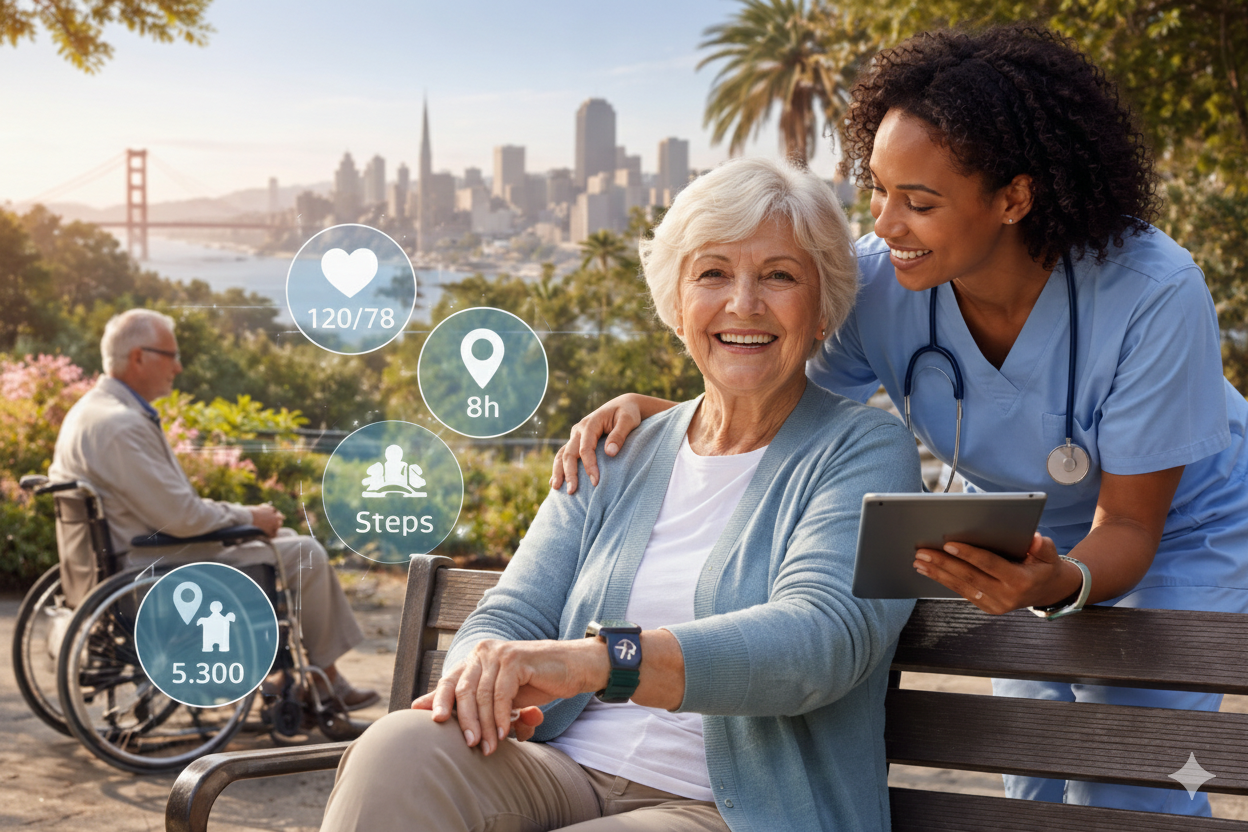
Home healthcare is growing fast. In Houston, one of the most populous and medically diverse cities in the United States, thousands of patients rely on home-based care for chronic conditions, post-surgical recovery, and senior care management. As demand rises, home healthcare providers need smarter ways to monitor patients between visits, improve care coordination, and reduce preventable hospital readmissions.
Remote patient monitoring solutions are helping healthcare businesses meet that need. Powered by IoT technology, these platforms give providers real-time visibility into patient health, without requiring a nurse or clinician to be physically present at all times.
Pain Points in Home Healthcare
Home healthcare providers face real operational and clinical challenges every day.
Manual follow-ups are time-consuming. Staff rely on scheduled calls or in-person visits to check on patients, which means health changes can go undetected for hours or even days. For patients managing chronic conditions like diabetes, heart disease, or COPD, delayed updates can lead to complications.
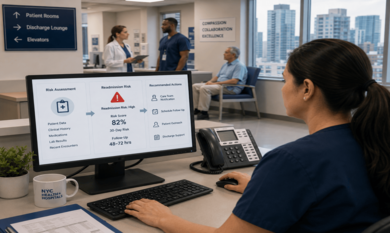
Post-discharge care is another major concern. Patients discharged from hospitals need consistent monitoring to prevent readmission. Without reliable digital tools, caregiver coordination becomes fragmented and documentation stays inconsistent. Limited visibility between visits makes it difficult for clinical teams to make timely, informed decisions.
These gaps are exactly what remote patient monitoring for home healthcare providers is designed to address.
What Is Remote Patient Monitoring?
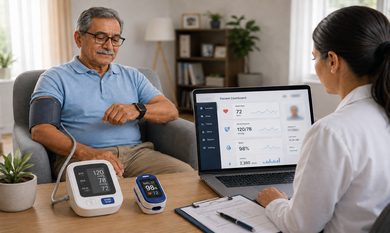
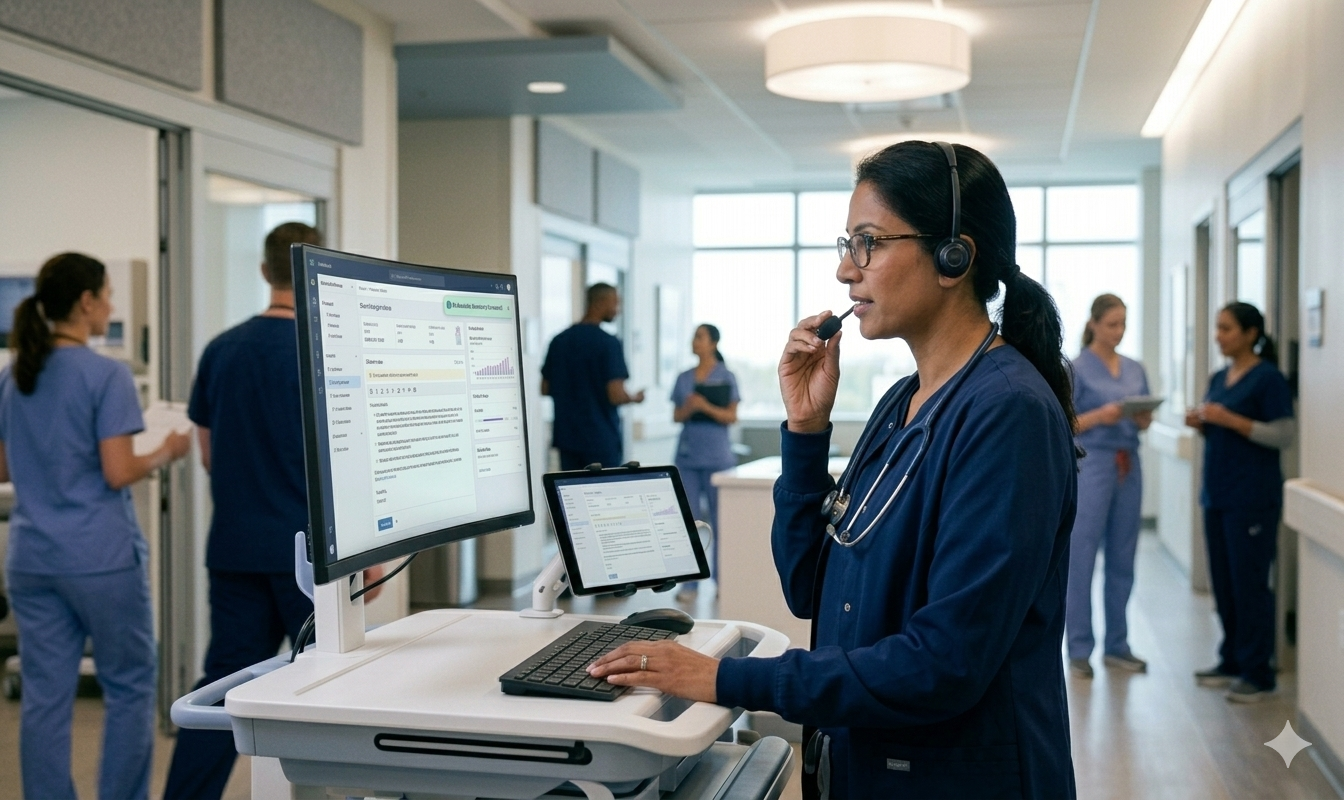
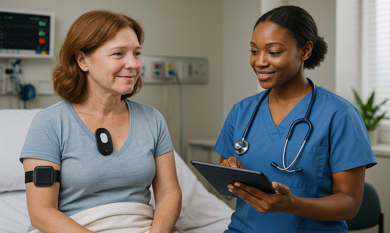
Remote patient monitoring (RPM) is the use of connected medical devices and software to collect patient health data outside of traditional clinical settings. Patients carry or wear devices that track vital signs such as heart rate, blood pressure, oxygen levels, weight, and glucose. That data is transmitted securely to healthcare providers in near real-time.
RPM does not replace doctors, nurses, or in-person care. It supports healthcare professionals by giving them better data and earlier warning signs, so they can make more informed clinical decisions.
How IoT Enables Remote Patient Monitoring
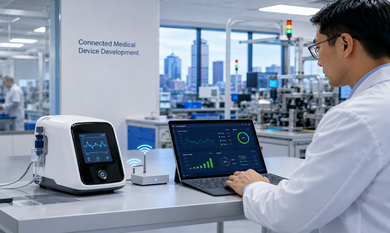
IoT development services in Houston are helping home healthcare businesses build the digital infrastructure needed for effective remote monitoring.
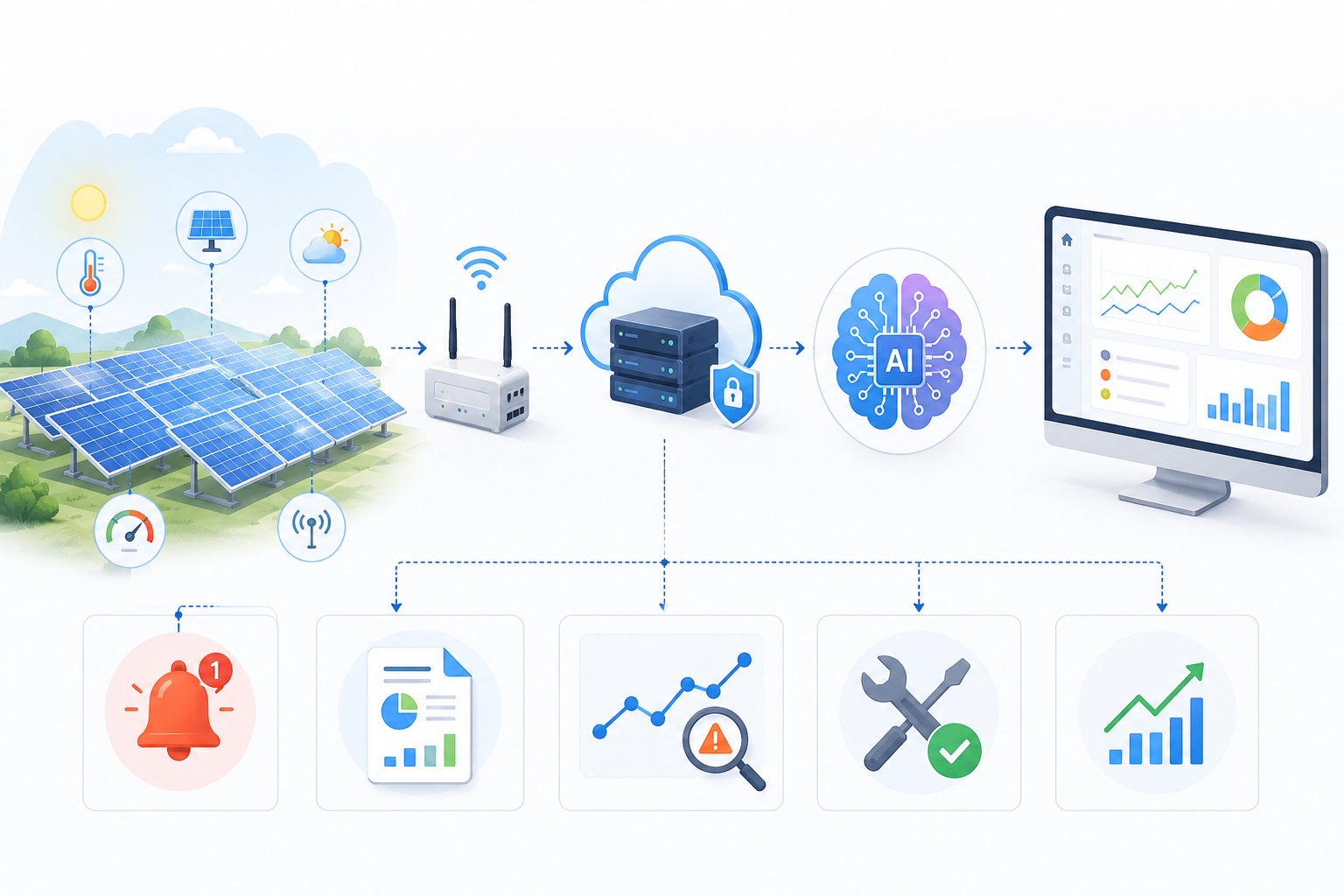
The core components of an IoT-based RPM system include:
Connected medical devices and wearable health monitors that capture patient vitals continuously or at scheduled intervals. These smart healthcare devices range from wristbands and patches to connected blood pressure cuffs and pulse oximeters.
Mobile applications that allow patients or caregivers to view readings, log symptoms, receive reminders, and communicate with their care team from a smartphone.
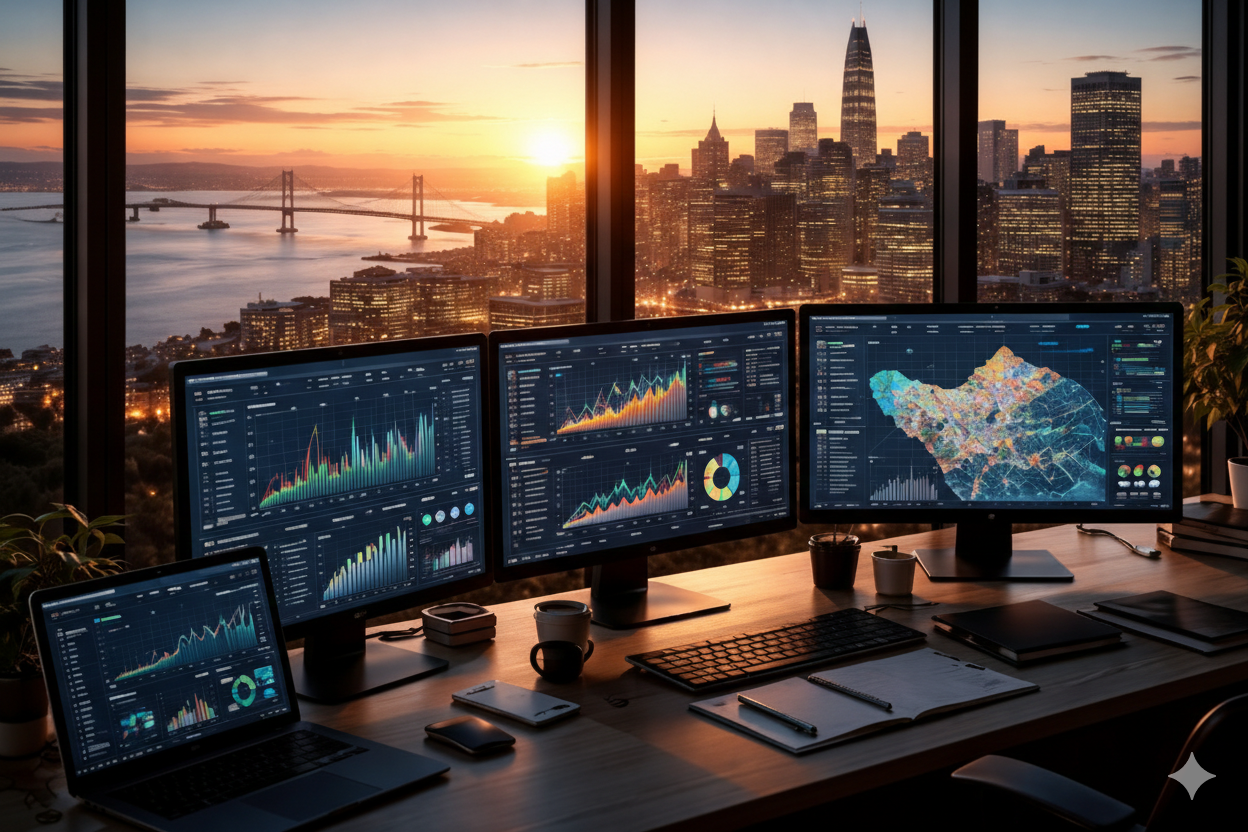
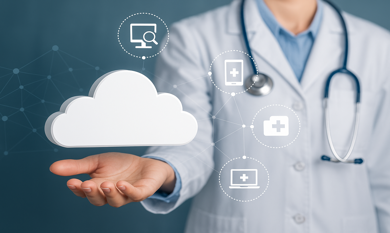
Cloud-based healthcare dashboards where clinicians can review patient health analytics, track trends, and monitor multiple patients at once. These dashboards support clinical decision support by surfacing early warning patterns.
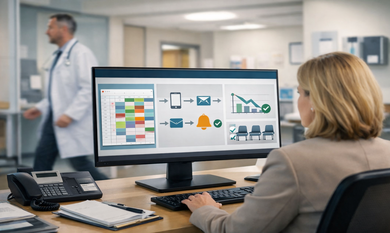
Automated alert systems that notify care teams when readings fall outside acceptable thresholds, enabling faster response to warning signs without waiting for the next scheduled visit.
APIs and EHR integration that connect remote care data with existing electronic health records, improving continuity of care across the healthcare IoT ecosystem.
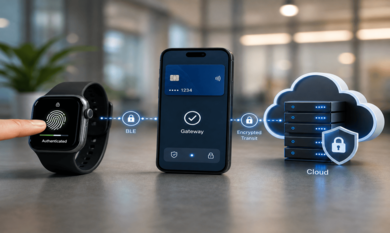
This end-to-end architecture makes IoT remote patient monitoring solutions for healthcare both practical and scalable for home healthcare businesses.
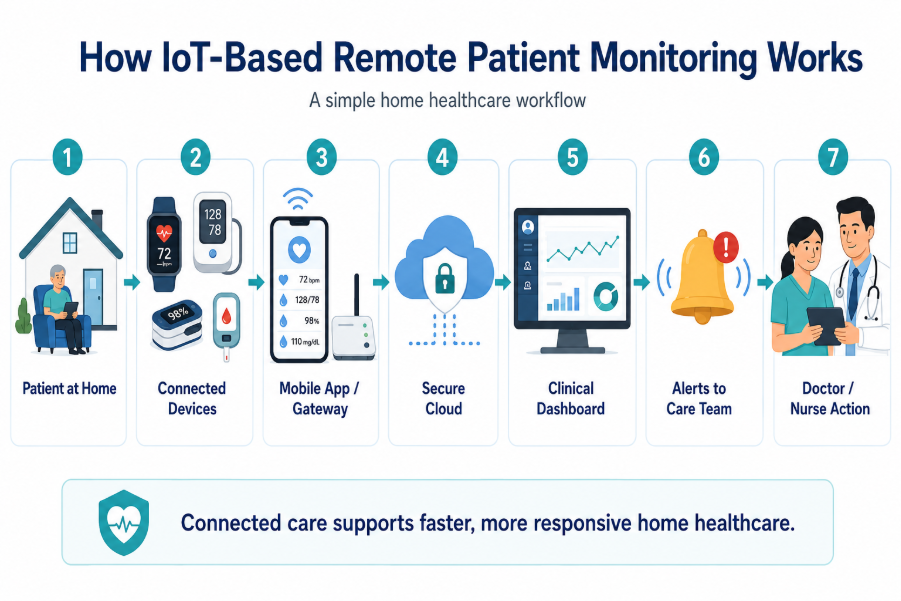
Fig. 1: How IoT-based remote patient monitoring connects patients, devices, cloud systems, and care teams in a home healthcare workflow.
Key Benefits for Home Healthcare Providers
The benefits of remote patient monitoring in home healthcare are meaningful for both patients and providers.
Real-time patient data gives clinical teams continuous insight into how a patient is doing, reducing dependence on manual check-ins and self-reported updates.
Improved chronic care management helps providers track patients with long-term conditions more consistently. Digital health monitoring enables care teams to spot trends and adjust care plans proactively.
Better post-discharge care reduces the risk of preventable readmissions. When patients are monitored after leaving the hospital, providers can intervene early if complications begin to develop.
Faster response to warning signs through emergency alerts and threshold notifications helps staff act before a situation becomes critical.
Improved patient engagement is another benefit. When patients can see their own health data through a mobile app, they become more involved in their own care.
Operational efficiency improves as well. Remote care management reduces unnecessary home visits while allowing staff to prioritize patients who genuinely need in-person attention.
Technology Stack and Architecture
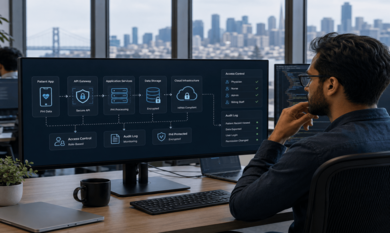
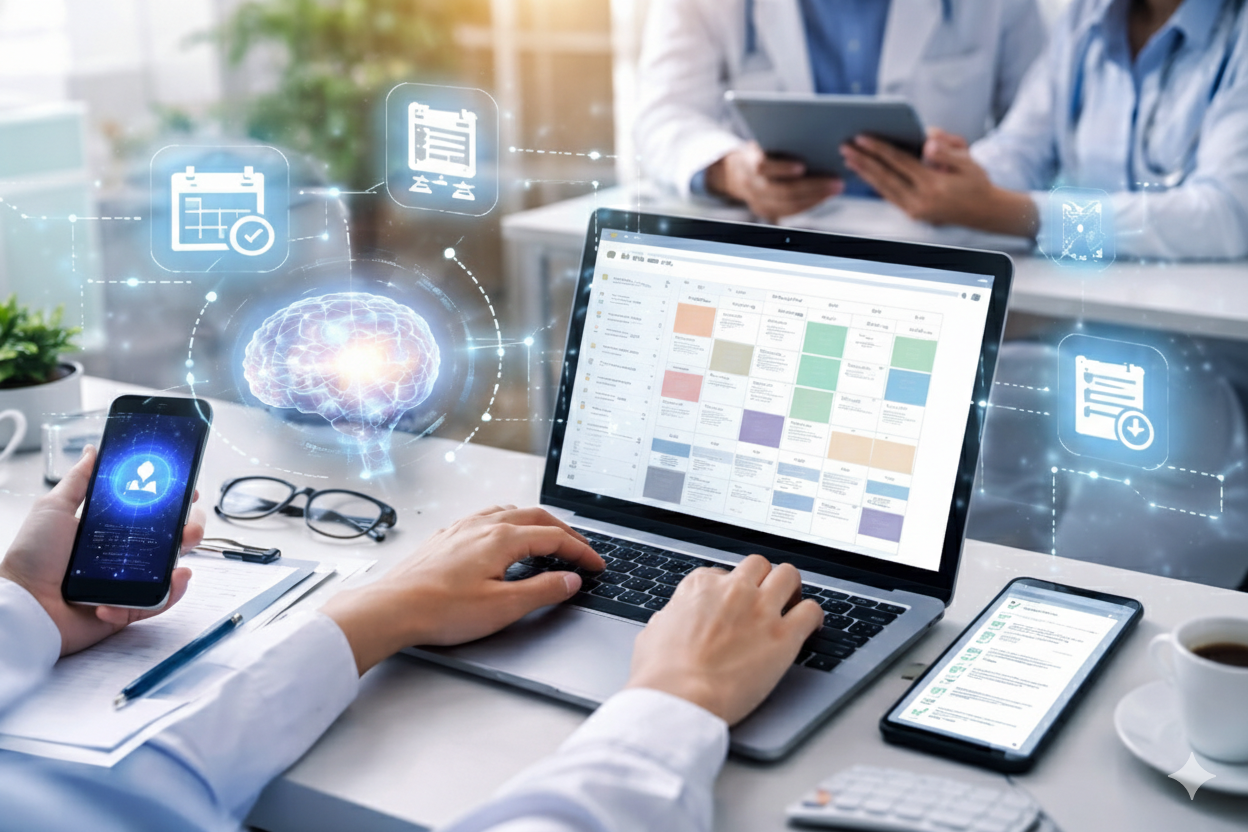
A well-built RPM platform typically includes IoT-enabled medical devices, a mobile app for patients and caregivers, a web dashboard for clinical staff, a secure cloud infrastructure for data storage and processing, APIs for third-party integrations, an alert and notification system, and data analytics tools for patient health reporting.
IoT development services in Houston are increasingly helping healthcare companies design this kind of modular, scalable architecture that can grow alongside their operations.
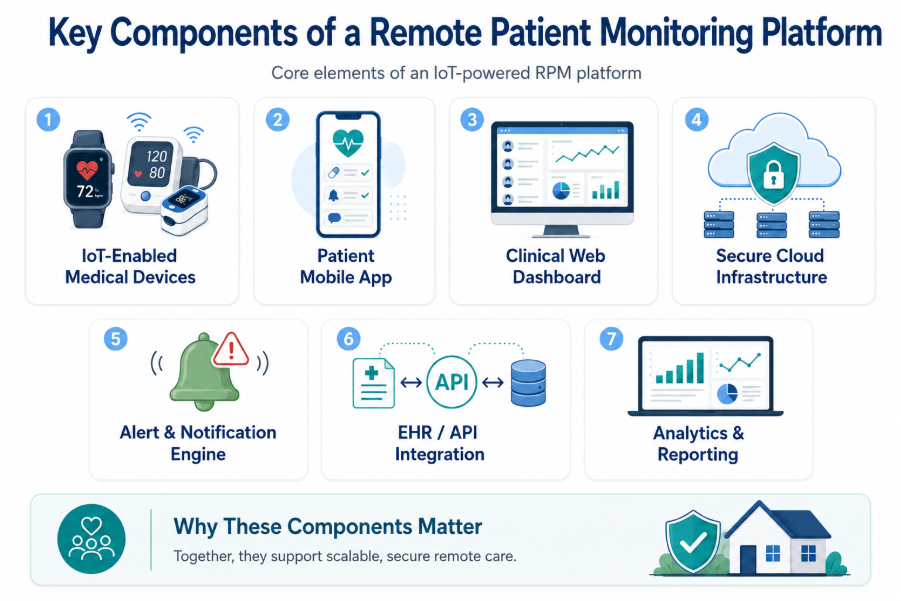
Fig. 2: Key components of an IoT-powered remote patient monitoring platform for home healthcare providers.
Security and Compliance Considerations
Security is non-negotiable in healthcare. Any platform handling patient data must meet strict compliance and ethical standards.
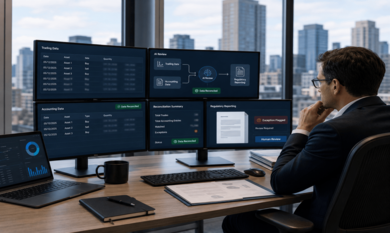
A responsible RPM platform should include HIPAA-compliant data handling, end-to-end encryption for data in transit and at rest, role-based access controls to limit who can view sensitive health information, patient consent workflows, secure cloud infrastructure with regular audits, device security protocols to prevent unauthorized access, and detailed audit trails for regulatory accountability.
Healthcare organizations should also ensure that human clinical supervision remains central to all care decisions. Technology supports providers. It does not replace their judgment or responsibility.
Real-Life Example
Philips, a global leader in health technology, has developed Virtual Care Management solutions that support patients beyond traditional care settings. According to Philips, its condition-specific protocols combine connected devices and engagement tools on a secure, interoperable cloud-based platform to deliver data and actionable insights for timely intervention. Licensed clinical professionals also provide monitoring and personalized health coaching, showing how connected healthcare platforms can support care coordination while keeping clinicians involved in patient oversight. Read more
Development ROI for Home Healthcare Businesses
For home healthcare providers, the business case for RPM goes beyond clinical outcomes.
Reducing manual follow-ups can free up staff time and lower operational costs. Better care coordination across distributed teams improves productivity. Scalable remote care management means providers can serve more patients without proportionally increasing headcount.
Home healthcare technology solutions in Houston can also help providers differentiate their services in a competitive market, attract more referral partnerships, and demonstrate value to payers and hospital discharge planners.
None of these outcomes are guaranteed, but with the right platform and the right implementation, they are realistic and measurable goals.
Why Choose Theta Technolabs
Theta Technolabs works with healthcare businesses to design and build custom IoT-powered platforms for remote patient monitoring, telehealth integration, and digital health monitoring. The team brings hands-on experience in IoT, Web, Mobile, and Cloud development, and understands the specific compliance, security, and scalability demands of the healthcare industry.
Rather than offering off-the-shelf tools, Theta Technolabs collaborates with home healthcare providers, digital health startups, and care platform businesses to build solutions tailored to their workflows, patient populations, and growth goals.
Conclusion
Remote patient monitoring is changing how home healthcare providers deliver care. By connecting patients, caregivers, and clinicians through secure IoT platforms, providers can offer more consistent monitoring, respond faster to health changes, and build more efficient care operations.
For Houston-based healthcare businesses ready to take that step, Theta Technolabs is a trusted IoT development company in Houston with the expertise in IoT, Web, Mobile, and Cloud to bring your remote care vision to life.
Ready to Build Your Remote Patient Monitoring Platform?
Theta Technolabs helps home healthcare providers, digital health startups, and care platform businesses design and develop custom IoT, Web, Mobile, and Cloud solutions built for the healthcare industry.
If you are looking to build or upgrade your remote patient monitoring platform, our team is ready to help.
Contact us at: sales@thetatechnolabs.com
Let's build something that improves care, not just technology.




.png)



.png)











.png)








.png)

.png)


.png)