A referral reaches your clinic on Monday. By Thursday, three employees have checked its status, the patient has called twice, and an appointment still needs confirmation.
The information exists, but completing the process requires moving between inboxes, spreadsheets, and clinical systems.
This is the kind of operational problem that can justify custom healthcare software development. Before commissioning an application, however, providers need to establish what should change, which systems must connect, and who will maintain the result.
The strongest investment starts with a defined workflow and measurable expectations.
Follow One Patient Journey Before Choosing Features
Consider a hypothetical specialty clinic that receives referrals from several practices.
An employee checks whether documents are complete, another confirms appointment availability, and a clinician reviews information where necessary. Updates travel through separate channels.
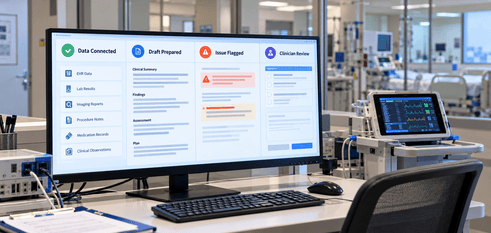
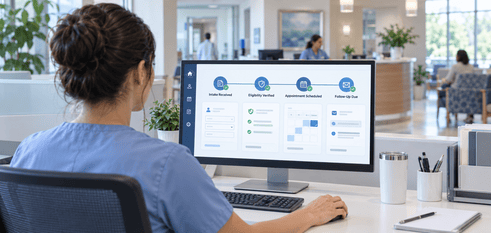
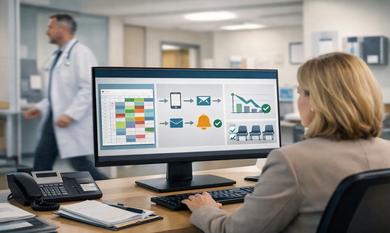
A custom referral workspace could bring status tracking, document requests, and scheduling updates together. Healthcare workflow automation could notify the appropriate employee when information arrives.
Before development, map the actual process. Record who receives each item, who reviews it, and what happens when information is incomplete.
Measure the current workload too. Referral processing time, repeated data entry, and unresolved requests provide a useful baseline for evaluating improvements after launch.
exec-c95512b6-54ef-4251-85b8-e8de7db773f7.png
Illustrative concept: a shared referral workspace using fictional patient labels.
Decide Whether to Build, Configure, or Enhance
Custom development is one option. Configuring an existing platform or adding an integration may address the same requirement with less implementation work.
For the specialty clinic, replacing the entire EHR may be unnecessary. A referral module connected to existing records could provide the required visibility.
Compare three approaches: extending current software, purchasing an established application, and commissioning a custom solution. Assess workflow coverage, integration access, recurring charges, and ongoing support.
When evaluating healthcare software development services, ask the provider to explain which existing components can remain useful.
A sensible proposal should identify what needs to be created, what can be reused, and why.
Make EHR Integration Part of Discovery
A dashboard has limited value if employees must manually copy information into it.
EHR integration planning should establish which information moves between systems, where it originates, and which application maintains the authoritative record.
For example, appointment status may come from a scheduling platform, while demographic information comes from the EHR. Define how the application handles mismatched identifiers, duplicate records, and delayed updates.
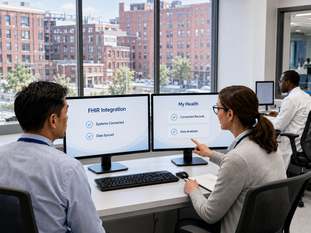
Healthcare software interoperability also depends on the actual interfaces available. References to APIs, HL7, or FHIR should lead to specific questions about supported data, permissions, versions, and vendor access.
Request an integration assessment before agreeing to a delivery schedule. Include interface fees, testing access, and responsibilities for future vendor changes.
Treat Patient Data Security as an Operating Responsibility
Patient data security involves the application, infrastructure, staff practices, and service providers.
Start by documenting what information the software collects and why. Define access by role, authentication requirements, audit records, retention, backups, and procedures for removing access.
For deployments subject to HIPAA, HHS explains that a cloud provider maintaining electronic protected health information on a regulated organization’s behalf is generally a business associate, even when it cannot decrypt that information. Applicable business associate agreements and risk analysis therefore need attention alongside technical safeguards. HHS.gov
A vendor’s compliance claim does not settle these responsibilities. Ask your privacy, security, and legal teams to review the proposed arrangement and applicable obligations.
Turn the Workflow Into Clear Acceptance Criteria
“Easy to use” is a useful ambition, but it is difficult to verify without examples.
For the referral workspace, acceptance criteria might require employees to locate an outstanding request, identify missing documents, and update its status without entering the same information again.
Test different roles separately. Reception staff, clinicians, administrators, and patients may need different permissions and interfaces.
When assessing practice management solutions, include the people who perform the daily work in design reviews.
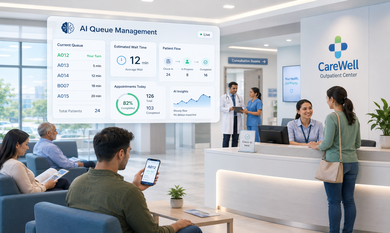
If AI is included, specify its purpose and review requirements. Summarising referral documents is different from recommending clinical care. Define how users check generated information and report errors.
Budget for the Years After Launch
Custom healthcare software costs extend beyond design and development.
Include data migration, integration charges, hosting, monitoring, security reviews, training, maintenance, and support. Ask which charges are recurring and which depend on usage.
Compare proposals using the same assumptions. A lower initial estimate may exclude migration, documentation, or ongoing infrastructure management.
Define ownership as well. Contracts should address source code, repositories, deployment accounts, documentation, data export, and transition assistance.
When comparing healthcare software development in the USA, evaluate communication and support arrangements alongside technical capability. Confirm how urgent issues are reported, who responds, and which support hours are included.
Test the Difficult Cases Before Expanding
A successful demonstration shows the intended journey. Acceptance testing should also examine interruptions and exceptions.
For the referral application, check what happens when:
- A referral arrives twice or contains incomplete identifiers.
- An employee’s access changes during an active session.
- An integration becomes unavailable.
- A restored backup needs reconciliation with newer records.
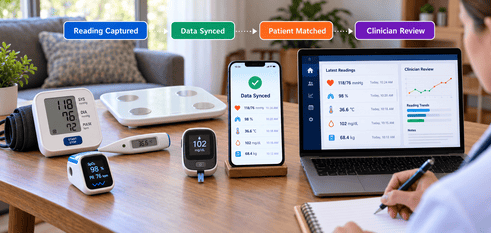
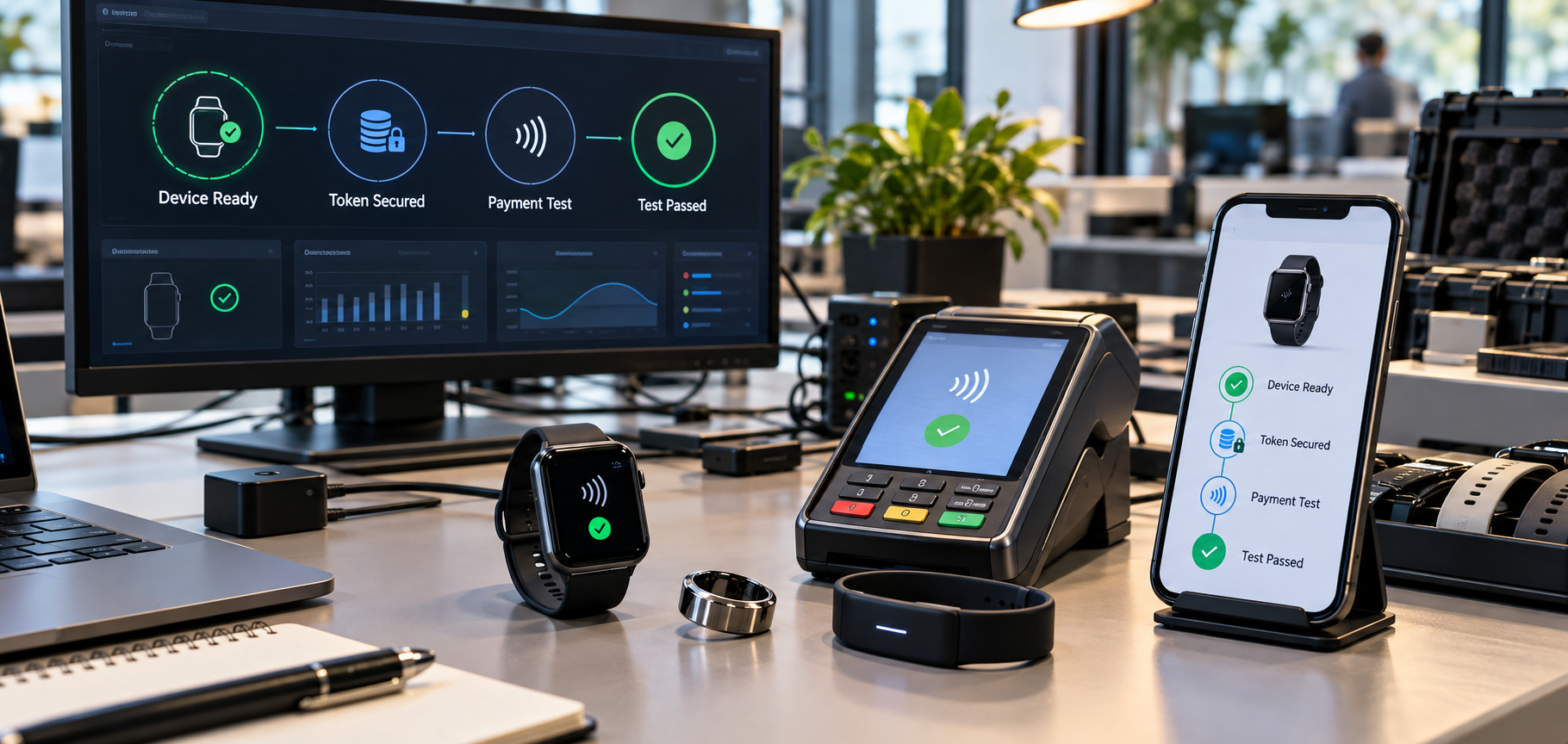
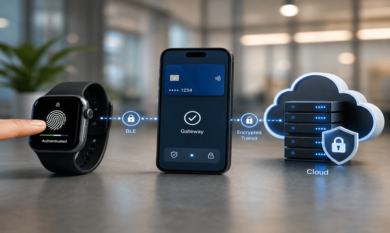
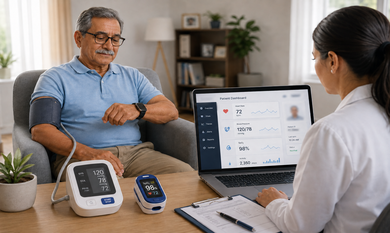
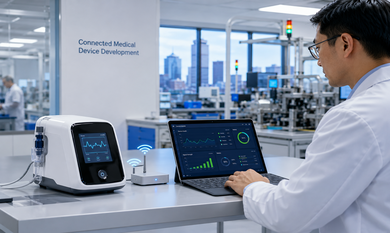
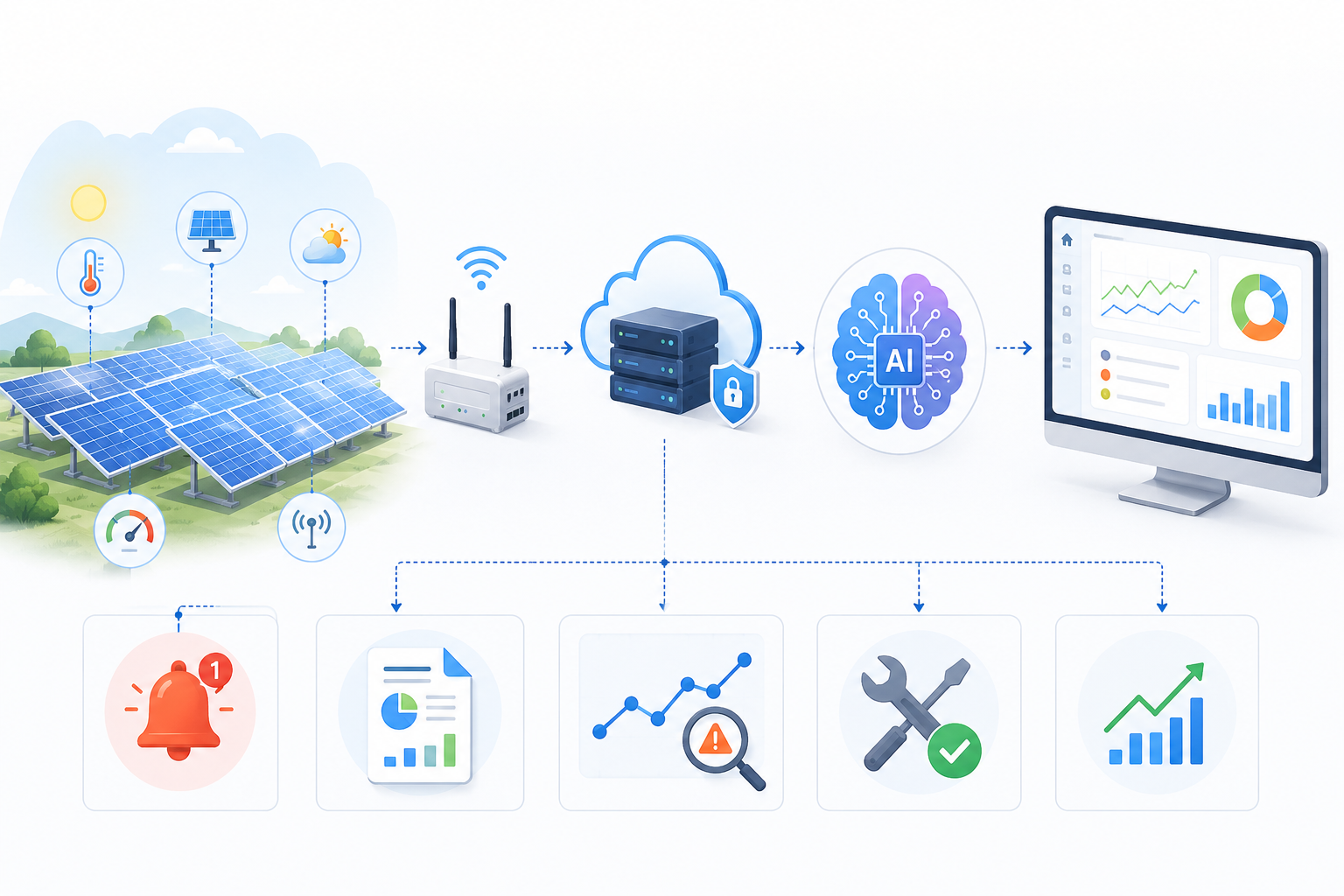
If connected hardware supplies information, test device association, timestamps, units, and interrupted connections.
Start with a defined department or workflow. Provide training, establish a fallback process, and agree on release criteria. Expansion should follow evidence from actual use, including staff feedback and unresolved issues.
exec-9fc6aa62-3af6-4deb-a22e-7de3b996d4d7.png
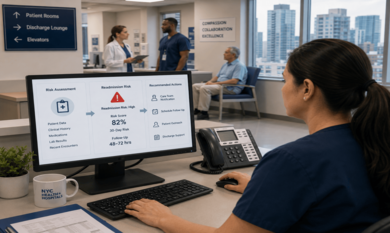
Illustrative concept: evaluating access, synchronization, and recovery before deployment.
Frequently Asked Questions
1. When does custom healthcare software make sense?
It is worth evaluating when important workflows remain poorly supported by existing products or require specific integrations. Compare configuration, purchased software, and custom development against documented requirements before deciding.
2. Can we improve our existing application instead of replacing it?
Often, yes. A technical assessment can identify opportunities to improve usability, connect systems, or add modules. The decision depends on architecture, vendor permissions, maintainability, and the required changes.
3. What should a development estimate include?
Request separate coverage for discovery, design, integrations, migration, testing, deployment, training, and support. Clarify assumptions, exclusions, recurring fees, and how scope changes affect the estimate.
4. How can providers evaluate a development partner?
Ask the team to explain a relevant workflow, integration approach, testing process, and support arrangement. Review appropriate project examples and request clear answers about ownership, documentation, and responsibilities.
5. How should we measure the investment’s value?
Choose measures tied to the original problem, such as processing time, duplicate entry, completion rates, or support workload. Compare results with a baseline and investigate whether improvements create additional work elsewhere.
Invest in a Process Your Team Can Sustain
A healthcare software investment delivers practical value when the application supports daily work, connects reliably, and remains maintainable.
At Theta Technolabs, we provide custom software development across web, mobile, and cloud platforms. Our team can develop new applications, enhance existing software, and integrate supported hardware with business systems.
Discuss your healthcare software requirements at sales@thetatechnolabs.com.